
Type I Thyroplasty: Silicone Medialisation of a Paralysed Left Vocal Cord, with Pre- and Post-operative Voice
Medialisation thyroplasty for unilateral vocal fold palsy. Intended audience: ENT residents, laryngologists and head and neck surgeons.
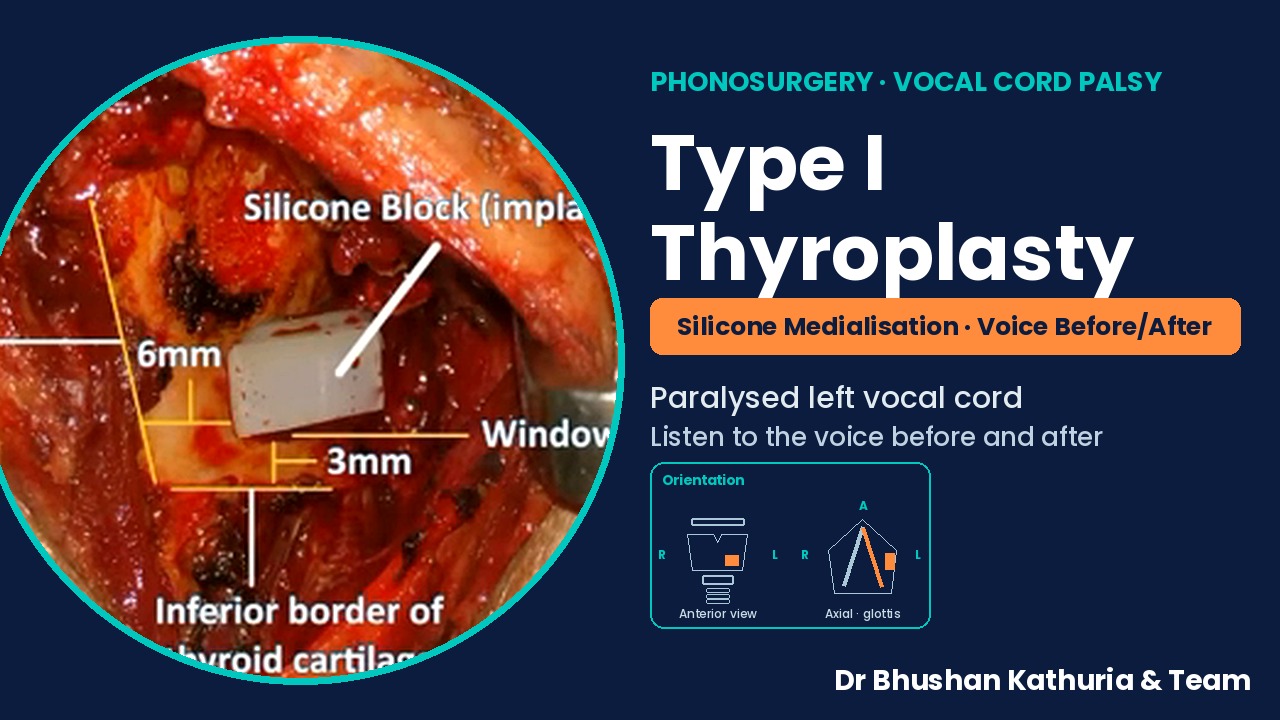
- Diagnosis
- Left vocal cord palsy, fixed in abduction
- Procedure
- Type I (medialisation) thyroplasty
- Implant
- Silicone block through a 7 × 13 mm window
- Outcome shown
- Pre- and post-operative voice
- Video
- 2 min · with original voice audio
Operative video with step captions and geometric orientation markings. Summary video.
Abstract
An 80-year-old patient presented with hoarseness for one year. Laryngeal endoscopy showed a left vocal cord palsy fixed in abduction; chest radiograph and skull base imaging were normal. A Type I (medialisation) thyroplasty was performed: through a horizontal neck crease incision the left thyroid lamina was exposed, a 7 × 13 mm window was cut about 6 mm from the midline and 3 mm above the inferior border, and a silicone block was inserted to medialise the paralysed cord. The operative steps and the pre- and post-operative voice are presented with the original audio.
Keywords: type I thyroplasty; medialisation thyroplasty; unilateral vocal cord palsy; phonosurgery; laryngeal framework surgery; silicone implant
Introduction
Unilateral vocal cord palsy with a persistent glottic gap produces a breathy, weak voice, an ineffective cough and a risk of aspiration. Laryngeal framework surgery, introduced by Isshiki as Type I thyroplasty, medialises the paralysed cord from outside the larynx without disturbing the vibrating mucosa [1]. Silicone (Silastic) implants carved or pre-formed for the window are widely used and can be adjusted or removed [2].
Case presentation
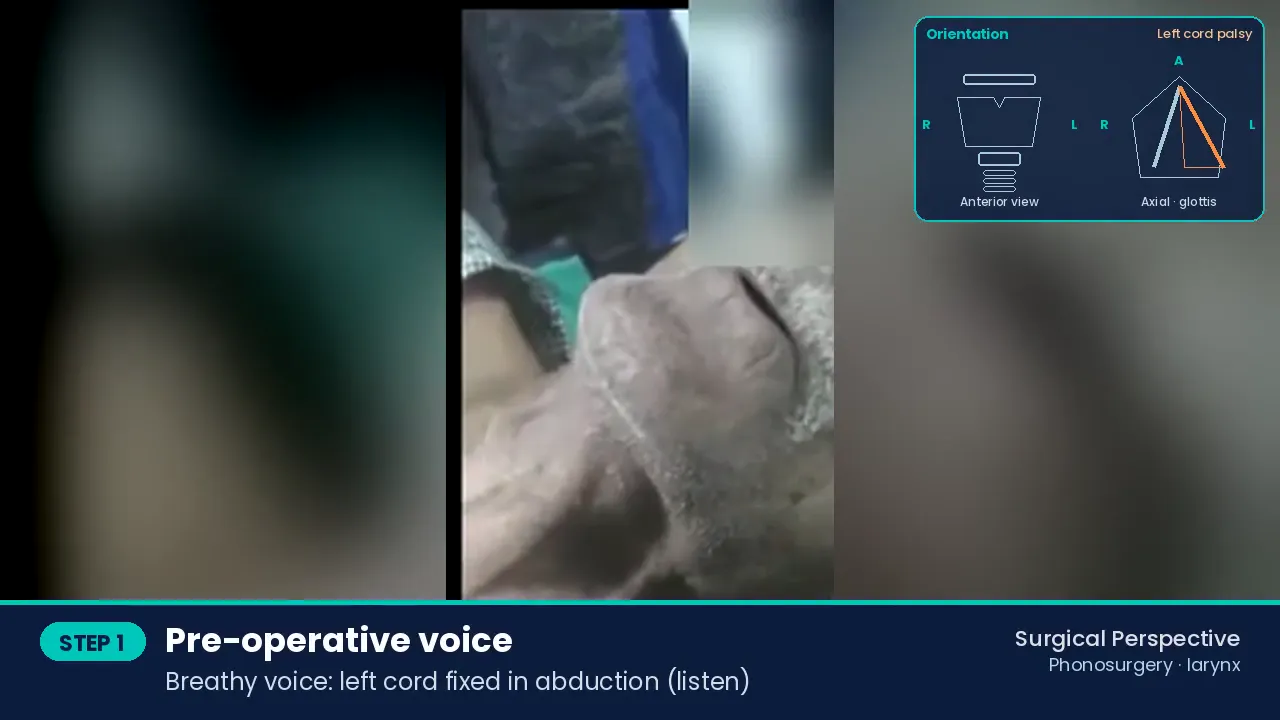
An 80-year-old had hoarseness of voice for one year. Laryngeal endoscopy showed a left vocal cord palsy fixed in abduction. Chest radiograph and skull base imaging were normal. Type I thyroplasty with medialisation of the left vocal cord was planned. Written informed consent for surgery and for de-identified educational use of images, video and voice was obtained.
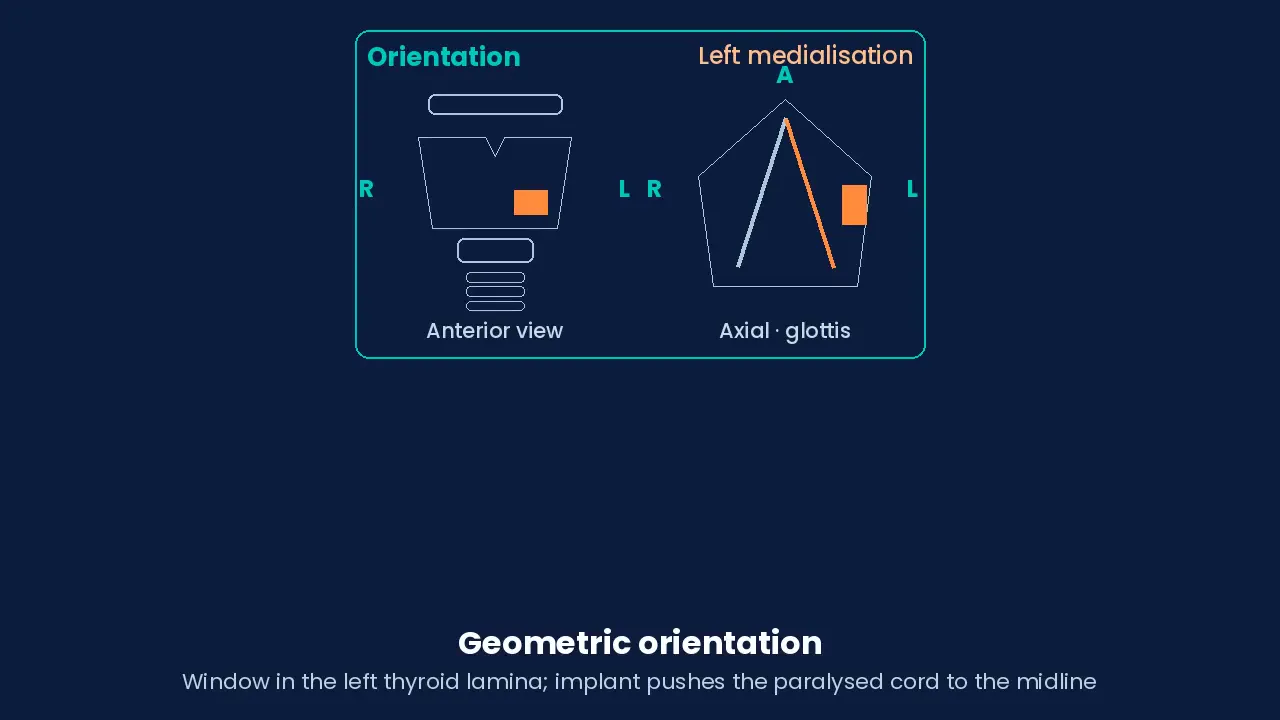
Surgical technique
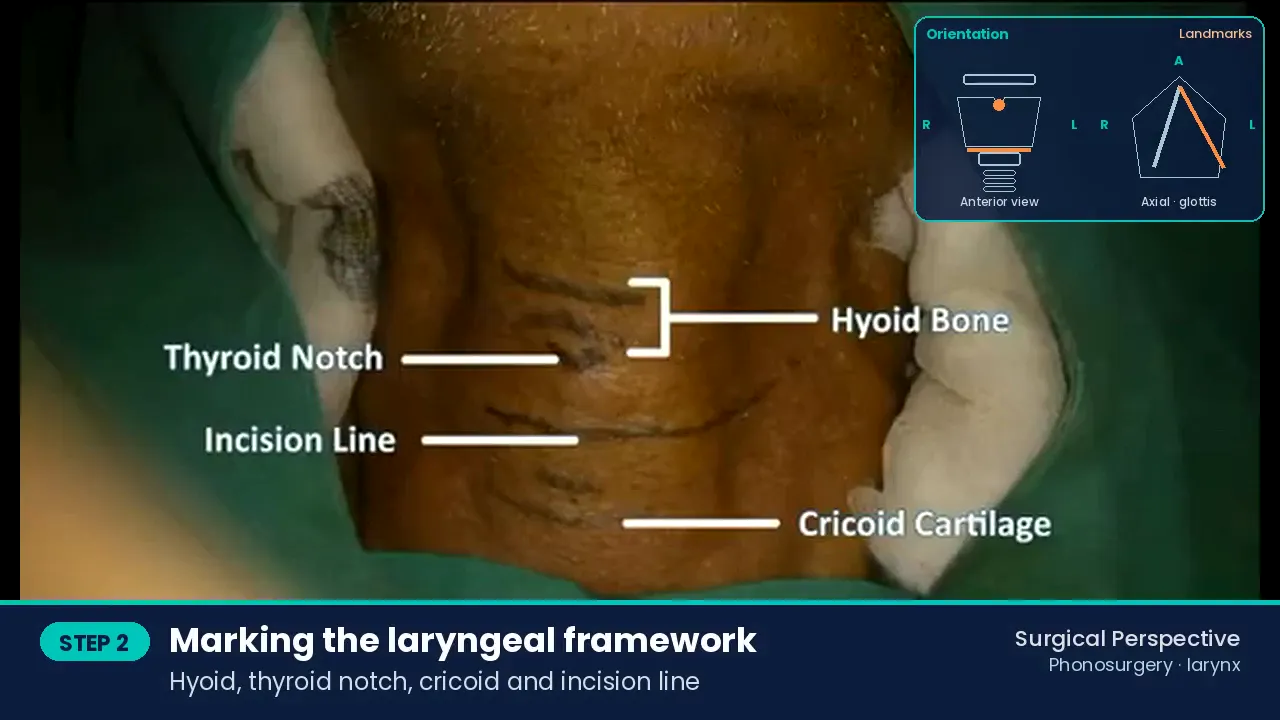
Marking the laryngeal framework
Hyoid bone, thyroid notch, cricoid cartilage and the incision line are marked.
Marking the laryngeal framework Skin incision
Horizontal skin-crease incision at the level of the thyroid lamina.
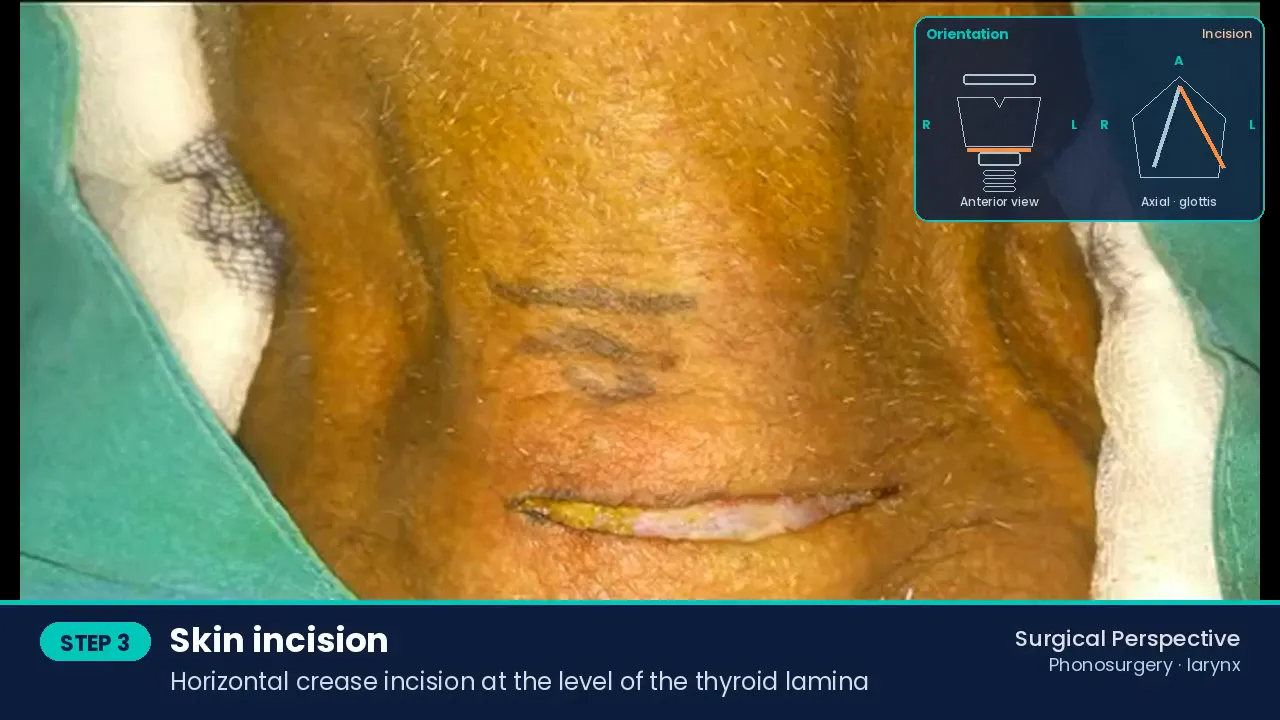
Skin incision Strap muscles
Strap muscles are split in the midline and retracted.
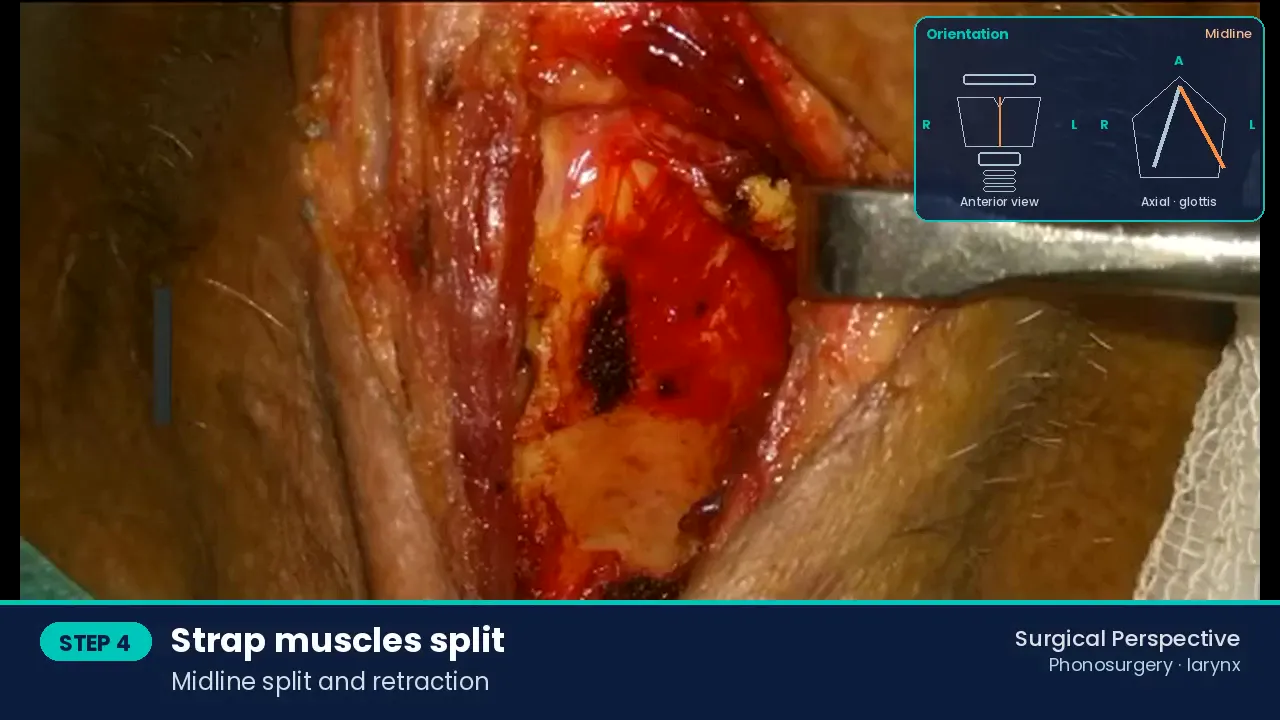
Strap muscles Outer perichondrial flap
The outer perichondrium is raised over the left thyroid lamina.
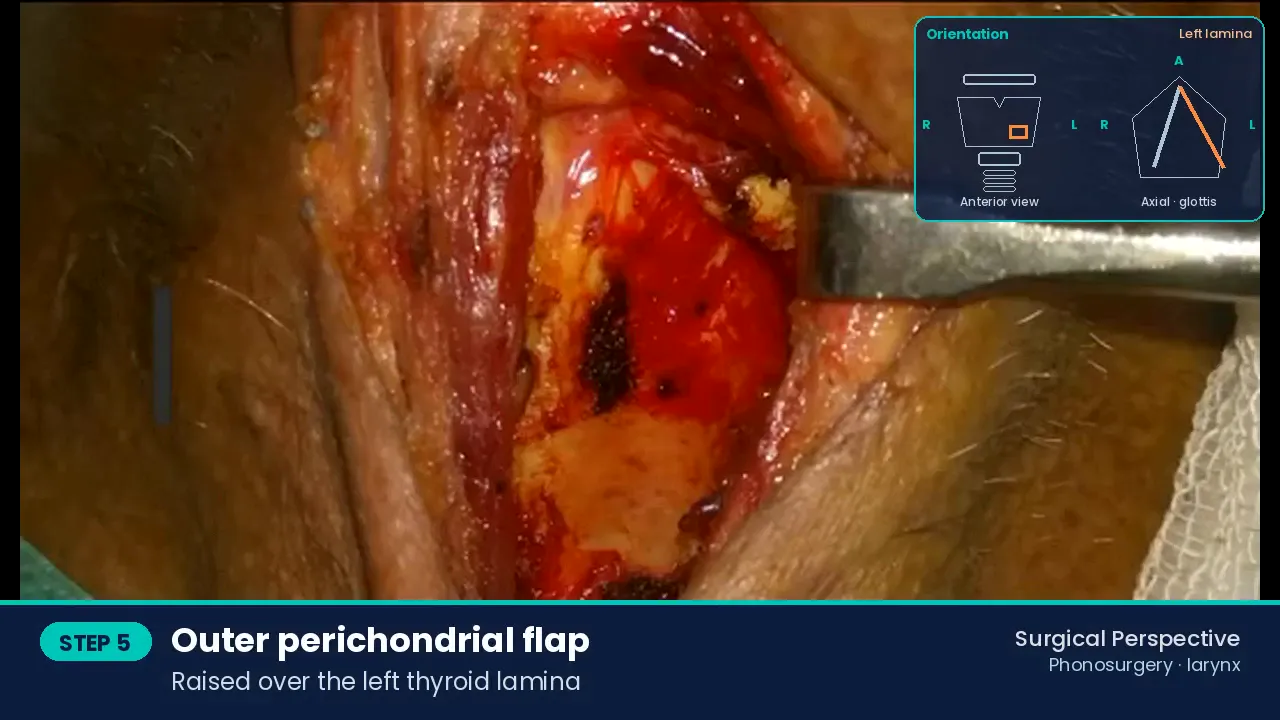
Outer perichondrial flap Window landmarks
The lamina is exposed; the window is planned from the midline and the inferior border.
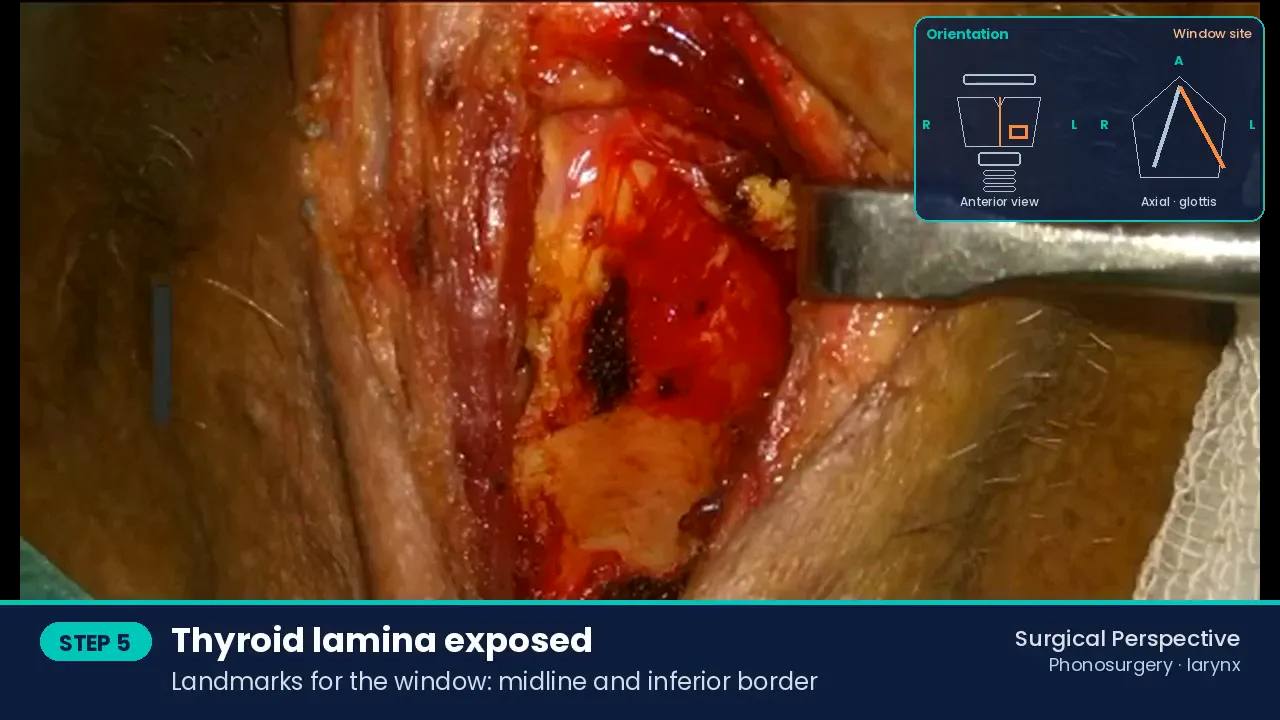
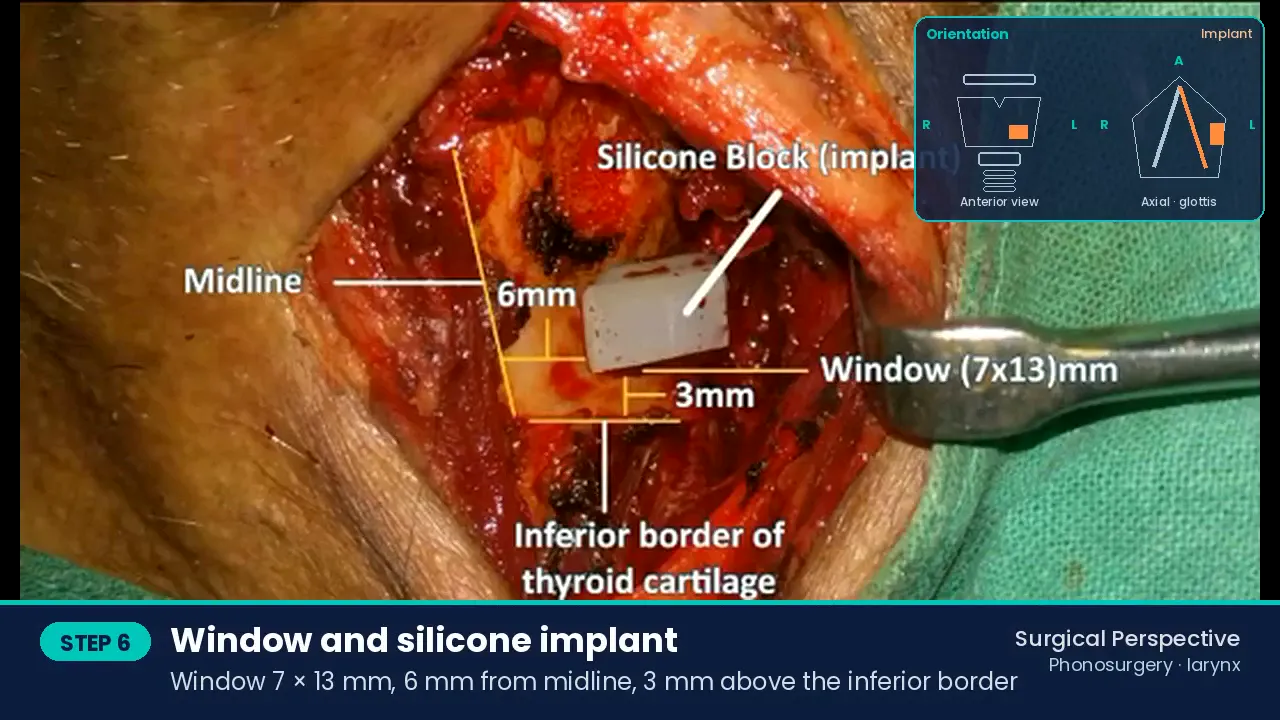
Window landmarks Window and silicone implant
A 7 × 13 mm window is cut about 6 mm from the midline and 3 mm above the inferior border, and a silicone block is inserted to medialise the cord.
Window and silicone implant Post-operative voice
Voice after medialisation (listen in the video).
Post-operative voice
Postoperative management
- Short period of voice rest; airway observation in the first hours.
- Videolaryngostroboscopy to confirm glottic closure.
- Speech therapy to optimise the voice; the implant can be revised if needed.
Discussion
Before framework surgery, a treatable cause of vocal cord palsy should be excluded and the likelihood of nerve recovery considered. Window placement by landmarks — near the level of the vocal fold, a few millimetres above the inferior border and away from the midline — protects the anterior commissure and places the implant opposite the vocal process. Performing the procedure with the patient able to phonate allows the degree of medialisation to be judged by the voice.
Learning points
- Rule out a treatable cause before medialisation.
- Place the window by landmarks: about 6 mm from the midline and 3 mm above the inferior border.
- Judge medialisation by the voice.
References
- Isshiki N, Morita H, Okamura H, Hiramoto M. Thyroplasty as a new phonosurgical technique. Acta Otolaryngol. 1974;78(5-6):451-457.
- Netterville JL, Stone RE, Luken ES, Civantos FJ, Ossoff RH. Silastic medialization and arytenoid adduction: the Vanderbilt experience. A review of 116 phonosurgical procedures. Ann Otol Rhinol Laryngol. 1993;102(6):413-424.
Consent and ethics
Written informed consent was obtained for surgery and for de-identified use of clinical images and video for education. No identifying information is shown; eyes are blurred where visible. This report is for medical education and does not replace individual clinical advice.
Surgical team
Dr Bhushan Kathuria & Team, Santosh Advance ENT Healthcare, Hisar. Consultants: Dr Bhushan Kathuria, Dr Parmod Jangra, Dr Harshvardhan. Clinical fellows: Dr Ayush, Dr Iqrorjon. Team · Fellowship and previous fellows.
How to cite
Kathuria B, and Team. Type I Thyroplasty: Silicone Medialisation of a Paralysed Left Vocal Cord, with Pre- and Post-operative Voice. Surgical Perspective · Surgical Case Reports. 2026. Available at: https://bhushankathuria.com/case-type-1-thyroplasty-silicone-medialisation.html
More case reports
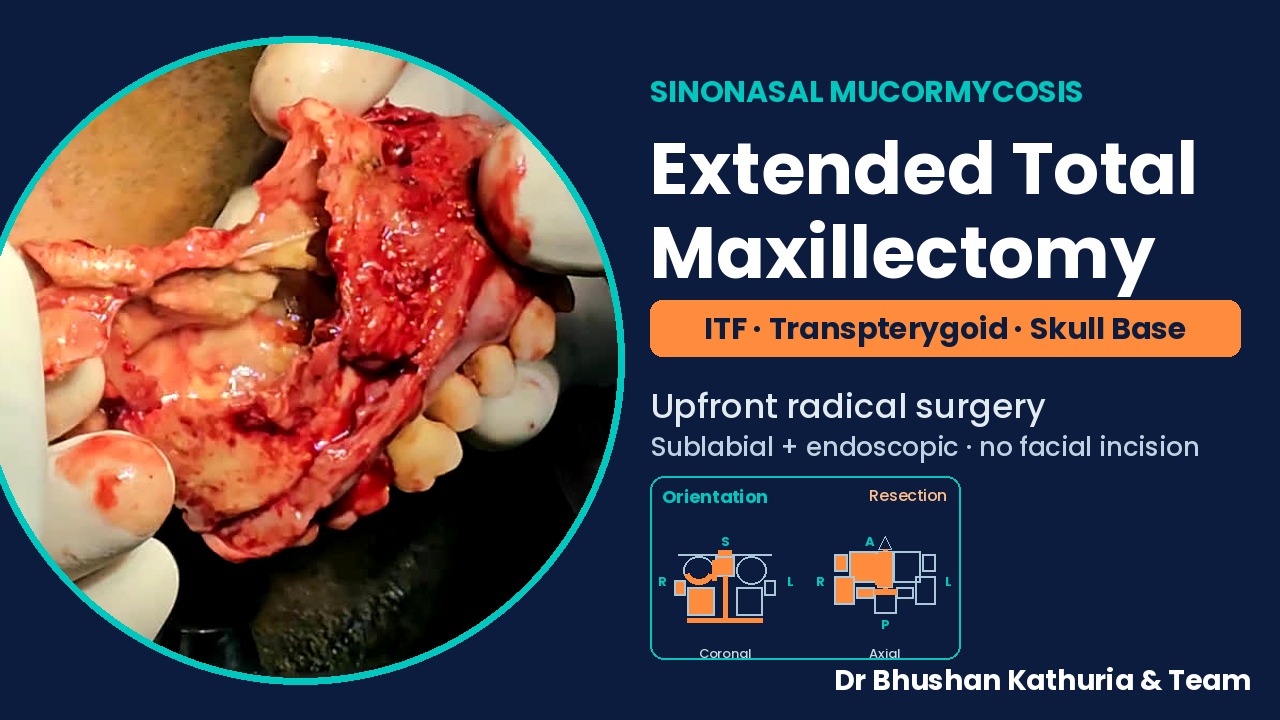
Extended Total Maxillectomy with Infratemporal Fossa, Transpterygoid and Anterior Skull Base Clearance for Sinonasal Mucormycosis
Upfront radical resection for fulminant sinonasal mucormycosis
▶ Video + case report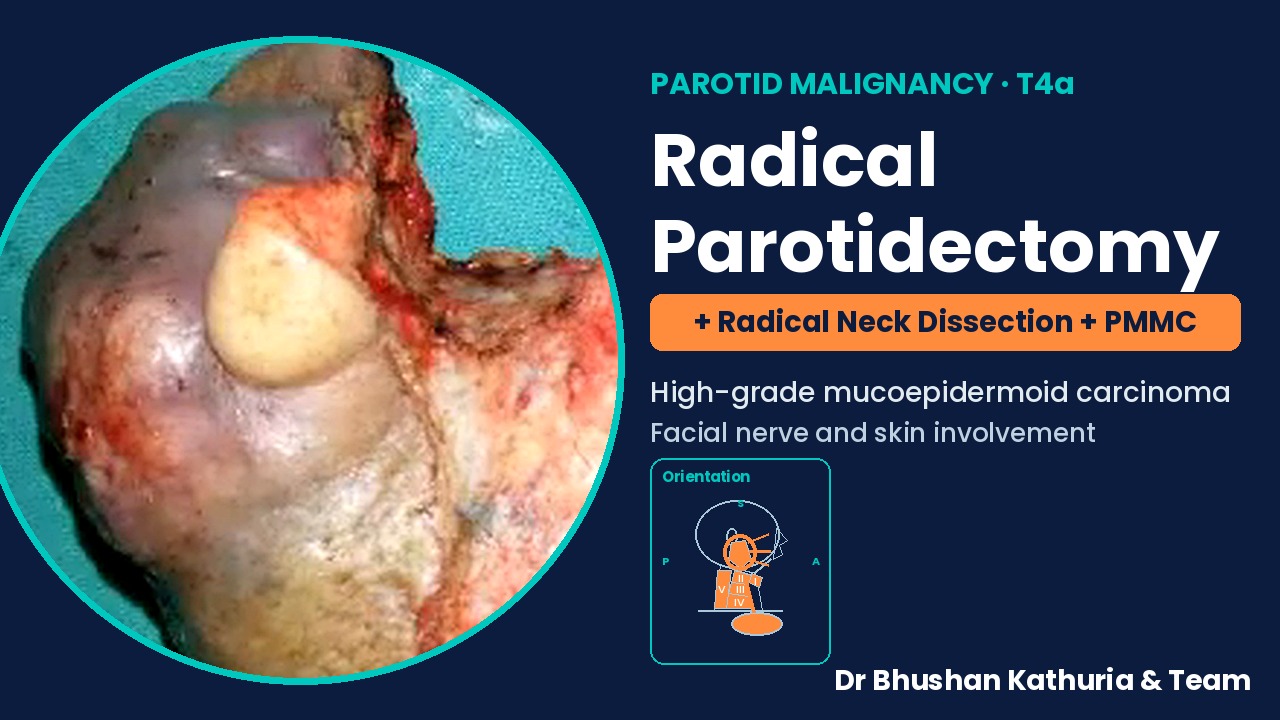
High-Grade Mucoepidermoid Carcinoma of the Parotid with Facial Nerve and Skin Involvement: Radical Parotidectomy, Radical Neck Dissection and PMMC Flap Reconstruction
Composite parotid resection with single-stage PMMC reconstruction
▶ Video + case report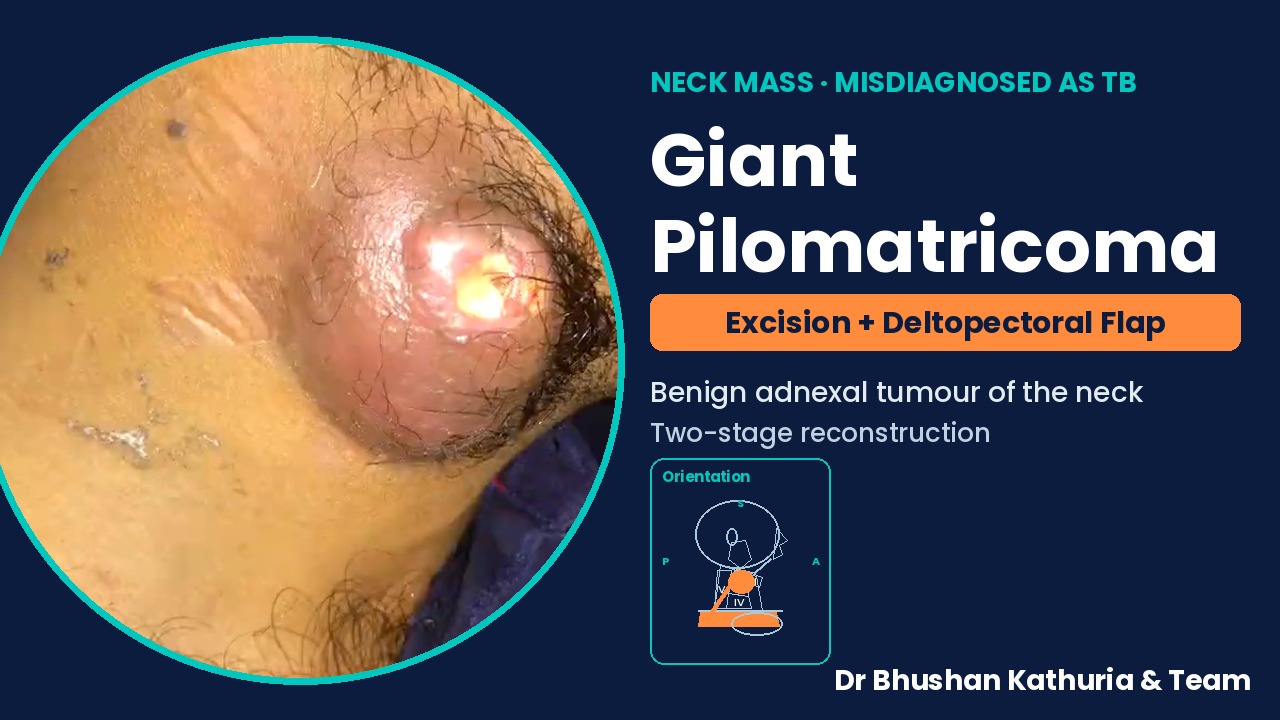
Giant Pilomatricoma of the Neck Misdiagnosed as Tubercular Lymphadenitis: Wide Local Excision and Two-Stage Deltopectoral Flap Reconstruction
Pilomatricoma presenting as a non-healing neck mass
▶ Video + case report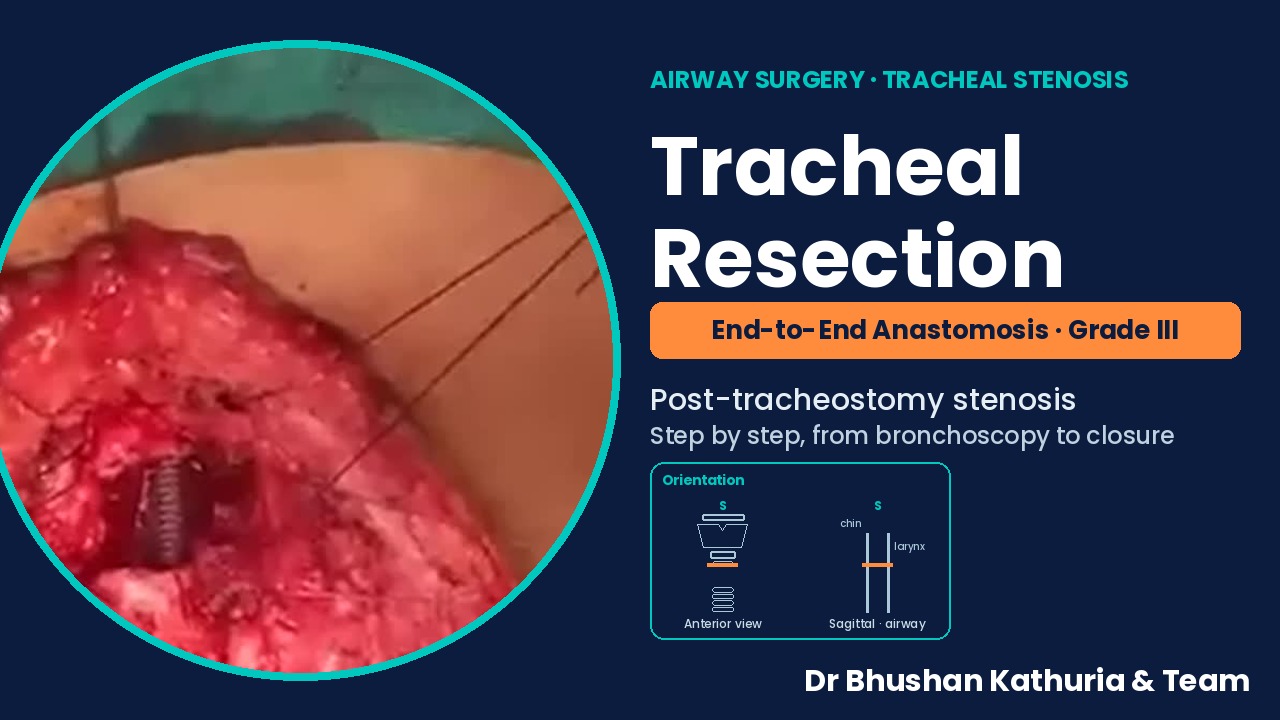
Segmental Tracheal Resection and End-to-End Anastomosis for Grade III Post-tracheostomy Tracheal Stenosis
Tracheal resection and primary anastomosis after failed decannulation
▶ Video + case report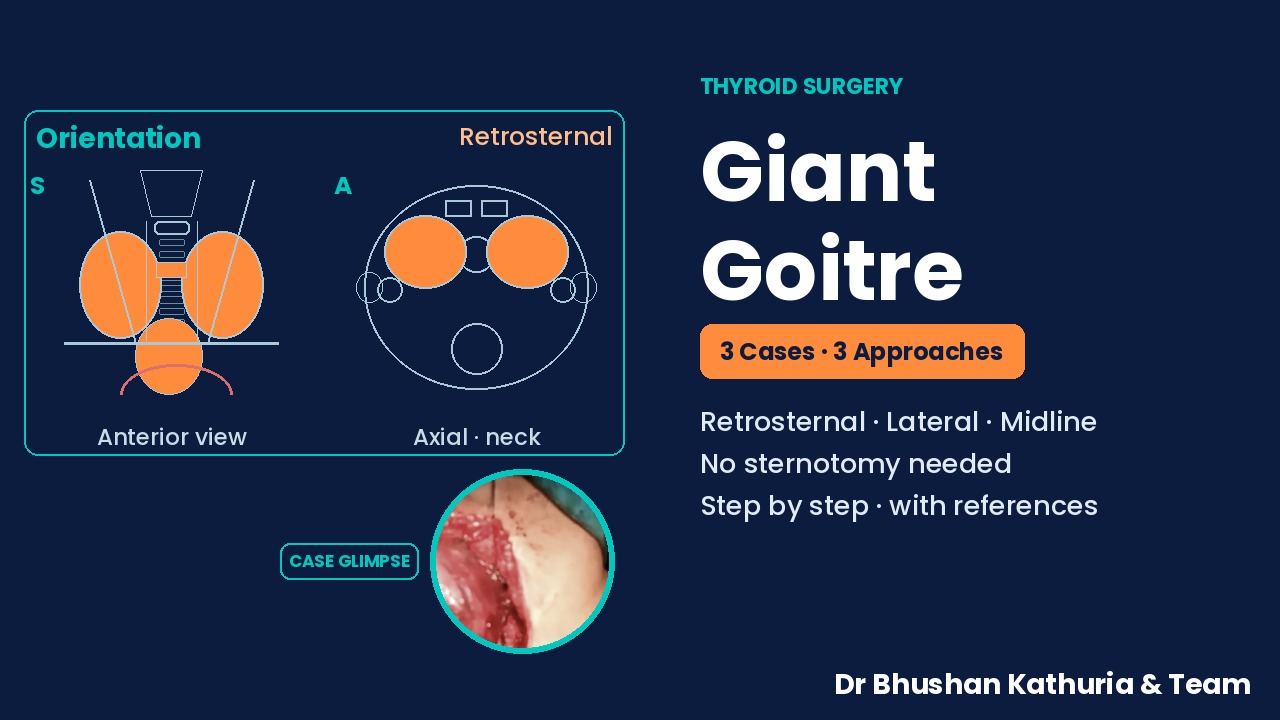
Giant Goitre: Three Cases and Three Approaches — Cervical Delivery of Retrosternal Extension, Lateral Strap-Sparing and Midline Strap-Dividing Thyroidectomy
Three giant goitres, three surgical approaches
Case report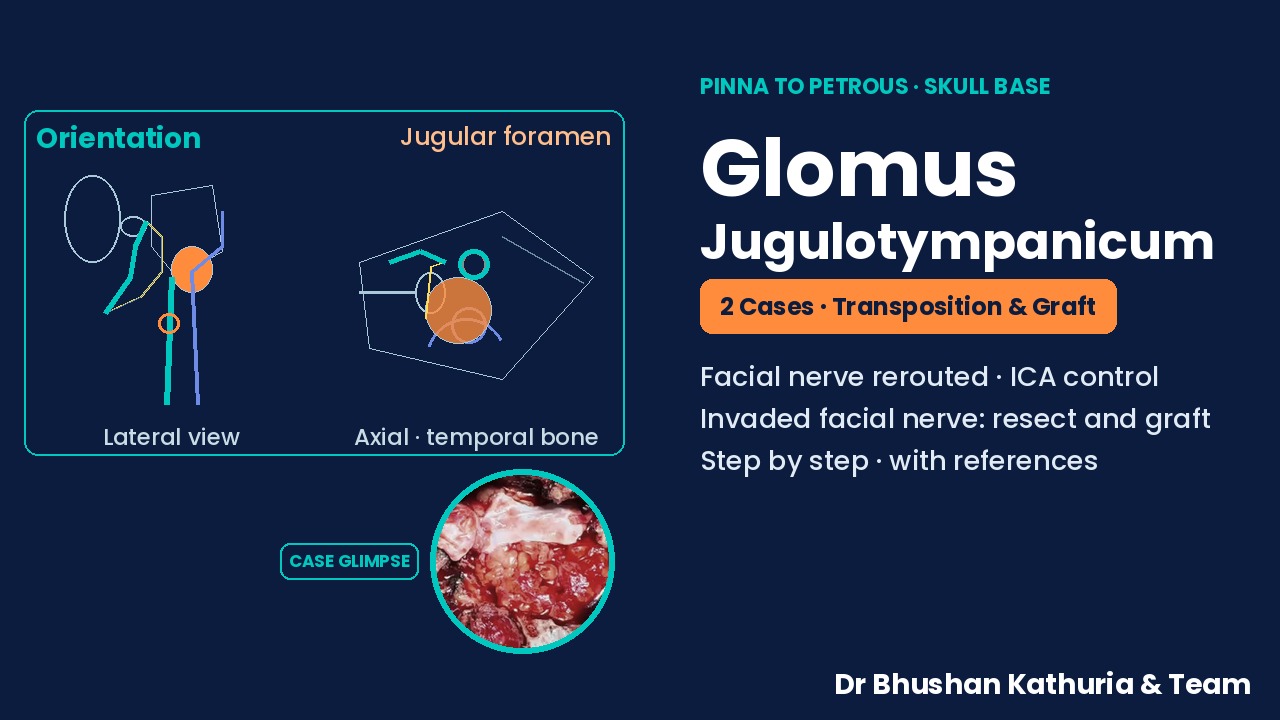
Glomus Jugulotympanicum, Two Cases from Pinna to Petrous: Facial Nerve Transposition with Carotid Control, and Facial Nerve Resection with Interposition Grafting
Two glomus jugulotympanicum cases: facial nerve transposition and facial nerve grafting
Case reportAll surgical case reports → · Voice Swallowing Breathing · Throat Cancer · Videos · YouTube channel · WhatsApp channel