Patient Education • Laryngology & Airway

Voice, swallowing & breathing symptoms

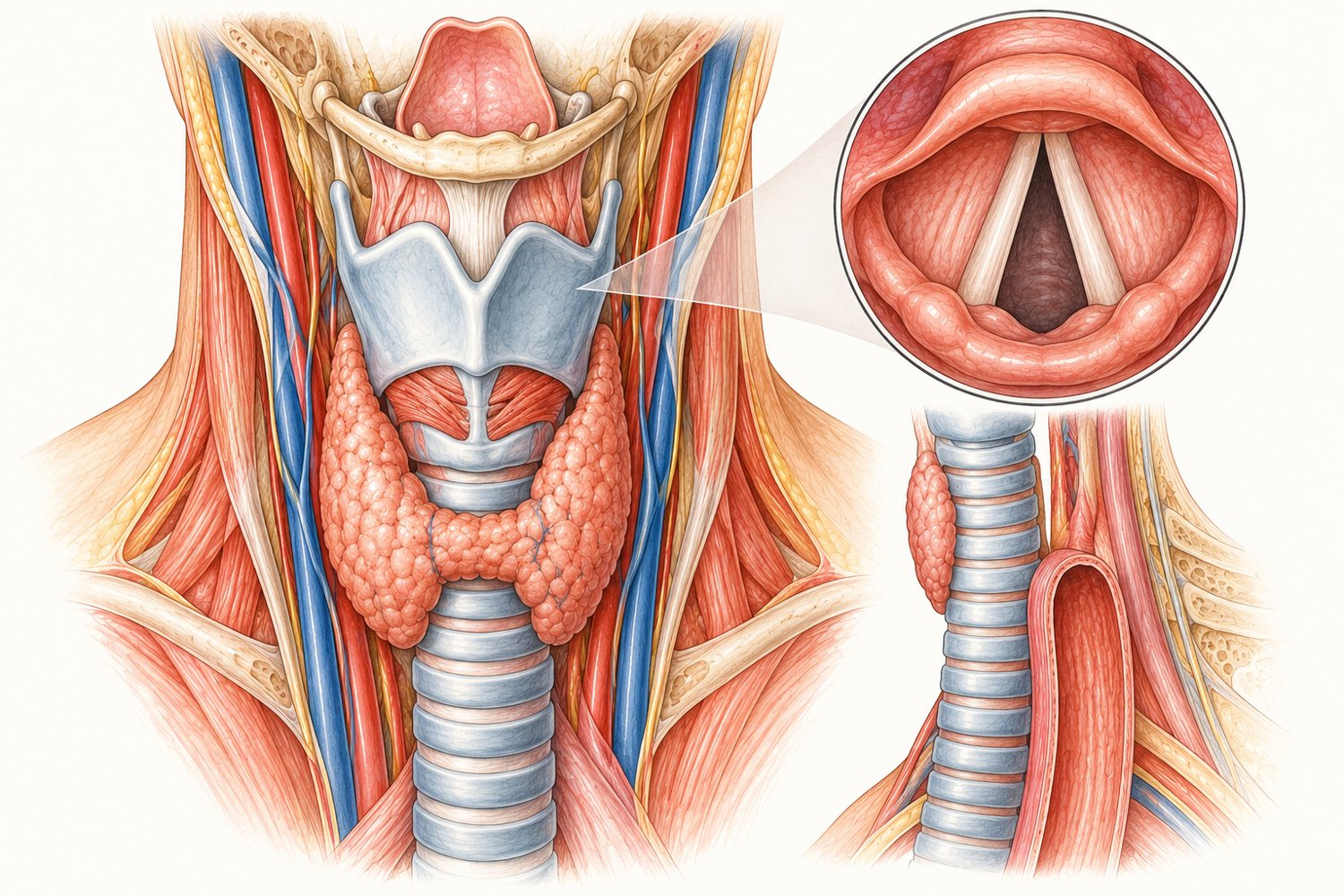
The larynx helps produce voice, protect the airway during swallowing and maintain a safe breathing passage. Persistent or progressive problems in any of these functions deserve structured assessment rather than repeated symptomatic treatment alone.

HoarsenessDysphagiaAspirationStridorLaryngoscopyRehabilitation
Three connected functions

Voice, swallowing and breathing often need to be assessed together.

A voice problem may arise from inflammation, vocal-fold lesions, nerve weakness, previous surgery, reflux-related irritation, neurological disease or head-and-neck disease. Swallowing difficulty may involve the mouth, throat or oesophagus and can occur after neurological illness, cancer treatment, surgery or other conditions.

Breathing symptoms arising at the level of the larynx may include noisy breathing, a sensation of upper-airway narrowing or stridor. Because the same anatomy contributes to all three functions, symptoms can overlap.

Symptoms worth reporting

Persistent hoarseness or weak voice; pain or effort when speaking; coughing or choking with food or drink; food sticking in the throat; wet or gurgly voice after swallowing; unexplained weight loss; recurrent chest infections; noisy breathing; progressive shortness of breath; or a new neck swelling.

Assessment pathway

What may happen during specialist evaluation?

1

History

Duration, progression, smoking exposure, previous surgery or intubation, reflux symptoms, neurological history and the relationship between voice, meals and breathing are reviewed.

2

ENT examination

The mouth, throat and neck are examined. Flexible nasolaryngoscopy may be used to view the larynx and vocal folds.

3

Functional assessment

Voice or swallowing assessment may involve a speech and language therapist. Instrumental swallowing tests such as FEES or videofluoroscopy may be selected when clinically appropriate.

4

Further tests

Imaging, endoscopy, biopsy, neurological assessment or other investigations are chosen according to the suspected cause rather than routinely for every patient.

5

Plan

Treatment is directed at the cause and may include voice therapy, swallowing rehabilitation, medical treatment, procedural treatment or surgery.

Swallowing safety

Why coughing or choking with meals matters.

Dysphagia can make eating and drinking inefficient and, in some patients, may allow food, fluid or saliva to enter the airway. Warning features can include coughing or choking during meals, a wet voice after swallowing, prolonged mealtimes, dehydration, weight loss or repeated chest infections.

Not every person who aspirates will cough. A bedside observation alone cannot always establish whether aspiration is occurring, which is why selected patients need an instrumental swallowing assessment.

Do not self-prescribe a texture-modified diet

Changing food consistency, fluid thickness or swallowing technique should ideally follow an individual swallowing assessment. The safest strategy depends on the cause and physiology of the swallowing problem.

Voice

Persistent hoarseness should be examined.

Short-lived voice change is common with upper-respiratory infections or vocal overuse. A voice change that persists, recurs frequently, progressively worsens or occurs with swallowing difficulty, neck swelling, unexplained ear pain, coughing blood or weight loss deserves ENT assessment.

Direct visualization of the larynx helps distinguish benign inflammatory or functional problems from vocal-fold lesions, movement disorders, nerve weakness and more serious disease.

Voice care while awaiting assessment

Stay adequately hydrated, avoid smoking, avoid repeated forceful throat clearing and avoid shouting or prolonged voice strain. These measures may reduce irritation but should not delay assessment of persistent or progressive symptoms.

Airway red flags

Breathing difficulty can become an emergency.

Seek urgent emergency medical care for significant or rapidly worsening breathing difficulty, high-pitched/noisy breathing (stridor), inability to swallow liquids or saliva, drooling with breathing difficulty, rapidly increasing neck or tongue swelling, bluish discoloration, severe bleeding or rapidly deteriorating symptoms.

Do not wait for a routine clinic appointment when airway compromise is suspected.

After prior treatment

Patients who have undergone neck surgery, thyroid surgery, airway procedures, prolonged intubation, radiotherapy or head-and-neck cancer treatment should mention this history because it can materially change the assessment pathway.

Prepare for a focused consultation.

Bring previous endoscopy reports or videos if available, imaging, operative notes, pathology reports, speech/swallowing assessments and a current medication list. Note when symptoms started and whether they are stable, intermittent or progressively worsening.

Medical information notice

This guide provides general patient education. It cannot diagnose the cause of voice, swallowing or breathing symptoms and does not replace examination, laryngoscopy, swallowing assessment, imaging, pathology or emergency evaluation when indicated.