
Hearing restoration is a journey, not just an operation.
कॉक्लियर इम्प्लांट — जांच से लेकर सुनना और बोलना सीखने तक।Bahut kam sunai deta hai? Cochlear implant ke baare mein jaanein.
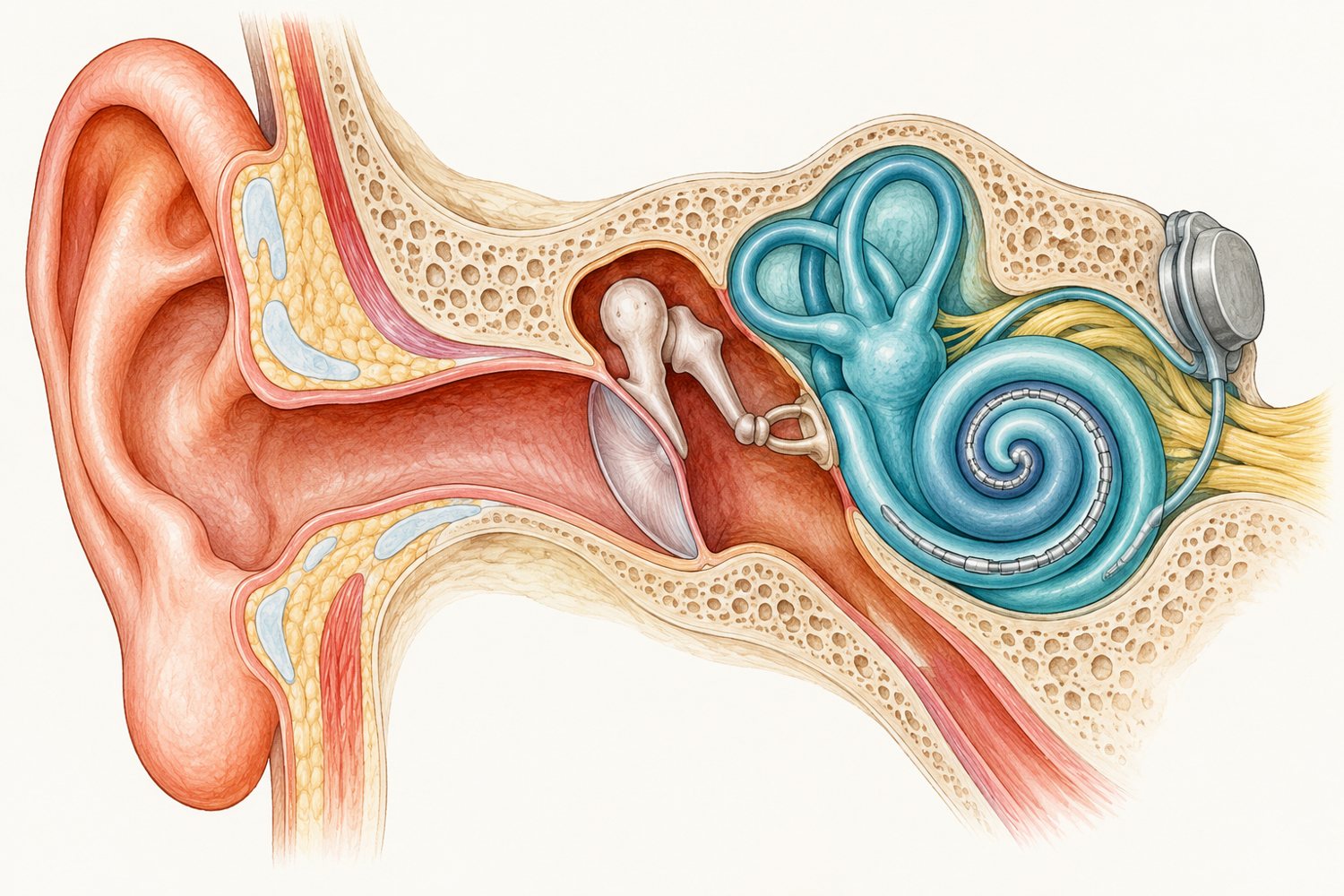
A cochlear implant works best when testing, scans, surgery, switch-on and speech therapy all work together. Families should expect a step-by-step pathway.
 Includes
Signs it's worth a review.
In lakshanon par doctor ko zaroor dikhayein.
Hearing aids no longer help enough
Severe or profound hearing loss.
Can hear but cannot understand speech
Even with well-fitted hearing aids.
A child with significant hearing loss
Early hearing access matters for speech.
Complex ear anatomy or earlier ear surgery
Needs extra imaging and planning.
What happens, step by step.
Kya hota hai — step by step.
- Hearing testsHow much you hear, with and without aids.
- ENT reviewExamination and scans of the inner ear.
- DecisionBenefits, risks and device counselling.
- SurgeryImplant placed with anatomy-specific planning.
- Switch-on & therapyProgramming, mapping and listening therapy.
कॉक्लियर इम्प्लांट — आम सवाल
कॉक्लियर इम्प्लांट किसके लिए है?
जिन्हें मशीन से भी ठीक से सुनाई नहीं देता (बहुत ज़्यादा सुनने की कमी), उनके लिए कॉक्लियर इम्प्लांट हो सकता है। बच्चों में जितना जल्दी हो, बोलना सीखने में उतना फायदा। ऑपरेशन के बाद स्पीच थेरेपी ज़रूरी है।
हिसार में कॉक्लियर इम्प्लांट का इलाज कहाँ होता है?
संतोष एडवांस ईएनटी हेल्थकेयर, मंगलम लैब के पास, दयानंद कॉलोनी, जिंदल हॉस्पिटल रोड, मॉडल टाउन, हिसार (हरियाणा) 125001 में डॉ भूषण कथूरिया और ENT टीम कॉक्लियर इम्प्लांट की जांच और इलाज करती है। OPD सोमवार से शनिवार, सुबह 10 से शाम 5 बजे; इमरजेंसी के लिए ENT सेवाएं 24 घंटे। फोन / WhatsApp: 85291 66866 / 70156 71278।
क्या आयुष्मान कार्ड या बीमा से इलाज हो सकता है?
हाँ, आयुष्मान भारत और सभी TPA बीमा में कैशलेस इलाज की सुविधा है — पात्रता, योजना के नियम और मंज़ूरी के अनुसार। ऑपरेशन या भर्ती से पहले केयर डेस्क से पुष्टि करें।
Please bring
It avoids repeat tests and speeds up decisions.
- Recent hearing tests (audiograms)
- Hearing-aid details
- CT / MRI of the ears
- Earlier ear surgery notes
Take the next step.
Appointment ke liye call ya WhatsApp karein.
Call or WhatsApp the care desk. Doctors can refer a patient the same way.