
Cancer care with surgery at the centre of one coordinated plan.
मुंह का छाला, गले में गांठ या आवाज़ बैठना — 3 हफ्ते से ज़्यादा हो तो जांच ज़रूर कराएं।Muh aur gale ka cancer — jaldi pakda jaye to ilaaj aasaan hota hai.
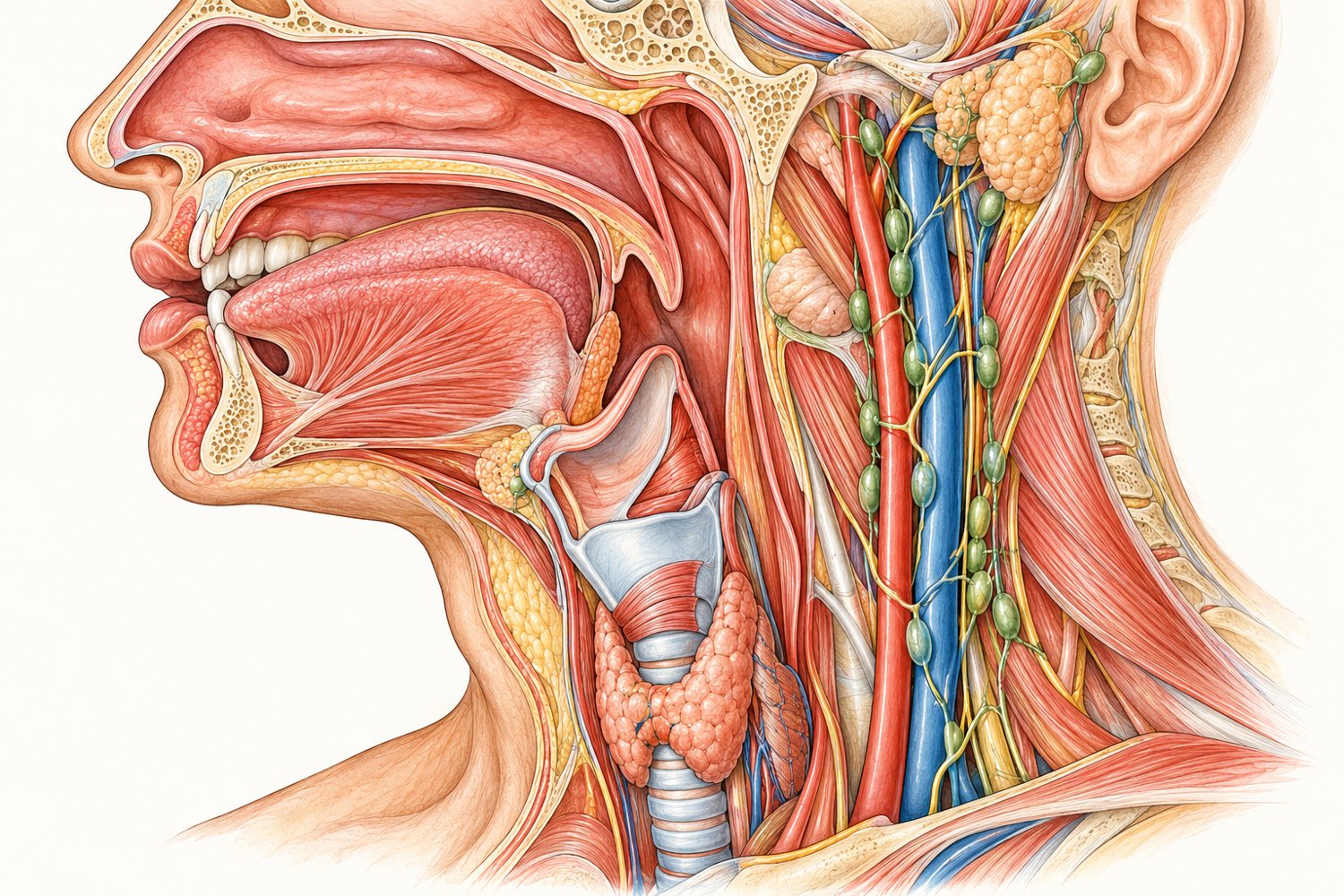
We confirm the diagnosis, find out how far the disease has spread, and plan treatment around the tumour and the person — protecting speech, swallowing and breathing wherever possible.
 Includes
Signs it's worth a review.
In lakshanon par doctor ko zaroor dikhayein.
New or suspected cancer
Biopsy review, staging and a treatment plan.
Cancer that has come back
Revision or salvage options, reviewed as a team.
Speech, swallowing or breathing at risk
When function and reconstruction need careful planning.
Complex neck or thyroid disease
When anatomy or earlier surgery makes it harder.
What happens, step by step.
Kya hota hai — step by step.
- ConfirmExamination, endoscopy and pathology review.
- StageScans to see local, neck and distant spread.
- PlanSurgery, radiotherapy, medicines — alone or together.
- ProtectAirway, swallowing, speech and reconstruction.
- Follow upRegular checks and rehabilitation.
मुंह, गले और सिर-गर्दन के कैंसर — आम सवाल
मुंह का छाला कब खतरनाक होता है?
तीन हफ्ते से ज़्यादा न भरने वाला छाला, मुंह में सफेद या लाल दाग, गले में गांठ या लगातार आवाज़ बैठना — इनकी जांच ज़रूर कराएं, खासकर तंबाकू या गुटखा खाने वालों में। जल्दी पकड़ा गया कैंसर अक्सर कम इलाज में ठीक होता है।
हिसार में मुंह, गले और सिर-गर्दन के कैंसर का इलाज कहाँ होता है?
संतोष एडवांस ईएनटी हेल्थकेयर, मंगलम लैब के पास, दयानंद कॉलोनी, जिंदल हॉस्पिटल रोड, मॉडल टाउन, हिसार (हरियाणा) 125001 में डॉ भूषण कथूरिया और ENT टीम मुंह, गले और सिर-गर्दन के कैंसर की जांच और इलाज करती है। OPD सोमवार से शनिवार, सुबह 10 से शाम 5 बजे; इमरजेंसी के लिए ENT सेवाएं 24 घंटे। फोन / WhatsApp: 85291 66866 / 70156 71278।
क्या आयुष्मान कार्ड या बीमा से इलाज हो सकता है?
हाँ, आयुष्मान भारत और सभी TPA बीमा में कैशलेस इलाज की सुविधा है — पात्रता, योजना के नियम और मंज़ूरी के अनुसार। ऑपरेशन या भर्ती से पहले केयर डेस्क से पुष्टि करें।
Please bring
It avoids repeat tests and speeds up decisions.
- Biopsy / pathology reports
- CT, MRI or PET-CT scans
- Operation notes
- Radiation details
- Treatment summaries
- Current medicines
Take the next step.
Appointment ke liye call ya WhatsApp karein.
Call or WhatsApp the care desk. Doctors can refer a patient the same way.