
Complex problems at the base of the skull, reached through the nose.
खोपड़ी के आधार का ट्यूमर — नाक के रास्ते दूरबीन से सर्जरी।Khopdi ke aadhar ka tumour — naak ke raaste endoscope se surgery.
Some conditions sit where the nose meets the brain. With careful scan review and the right team, many can be treated endoscopically — without an outside cut.
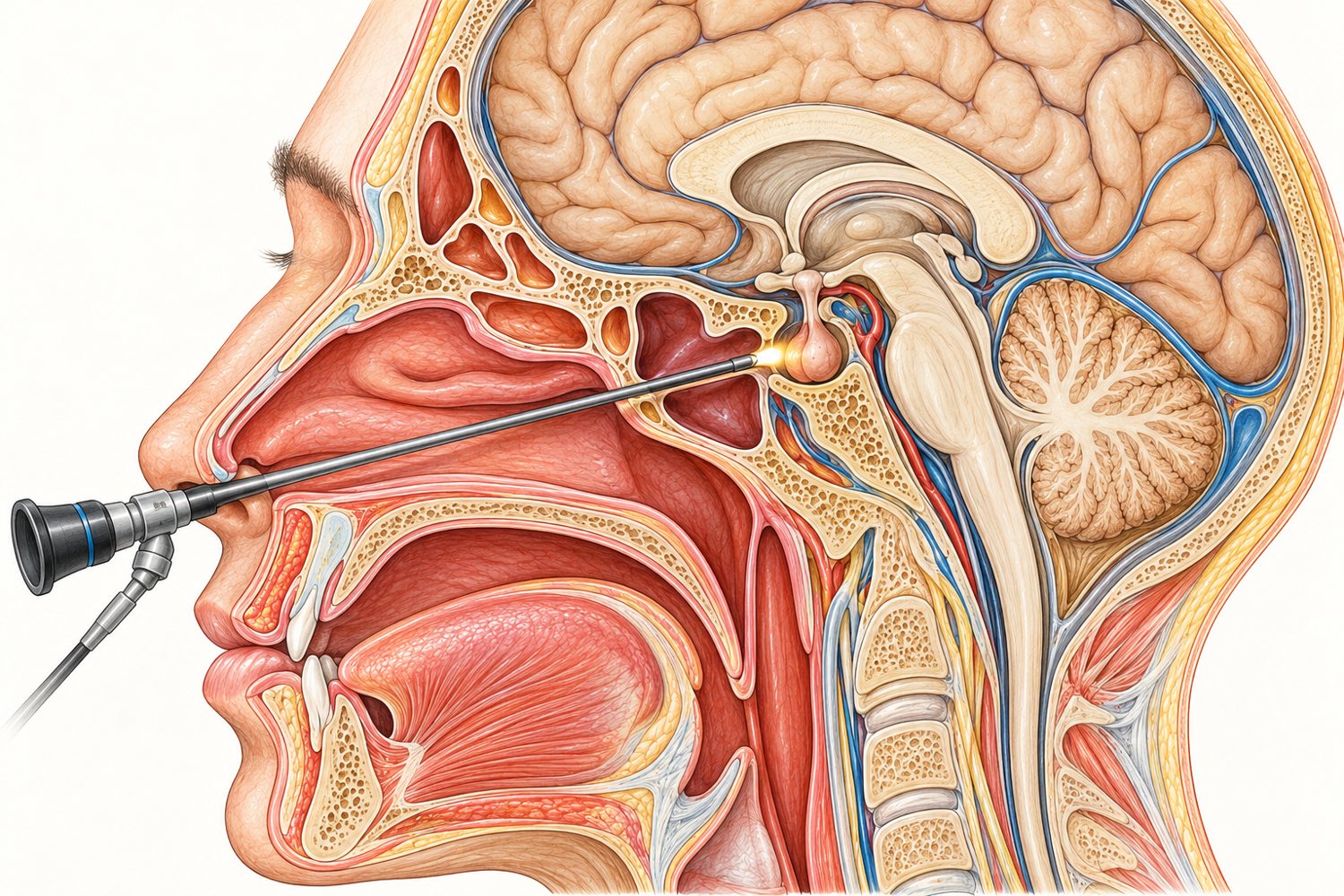 Includes
Signs it's worth a review.
In lakshanon par doctor ko zaroor dikhayein.
Clear fluid dripping from the nose
A possible CSF leak or skull-base defect.
Sinus disease reaching the skull base
To check whether endoscopic access is suitable.
Problems after earlier surgery
When anatomy has changed and revision is needed.
Cases needing joint planning
ENT, neurosurgery, radiology and pathology together.
What happens, step by step.
Kya hota hai — step by step.
- ScansThin-cut CT and MRI review of anatomy and disease.
- CorrelateEndoscopy, symptoms and earlier treatment.
- Choose the routeEndoscopic, open, combined — or no surgery.
- Team planJoint input when the case needs it.
- Follow upHealing checks and long-term review.
खोपड़ी के आधार (स्कल बेस) के ट्यूमर — आम सवाल
क्या पिट्यूटरी ट्यूमर नाक के रास्ते निकल सकता है?
कई पिट्यूटरी और खोपड़ी के आधार के ट्यूमर नाक के रास्ते एंडोस्कोप (दूरबीन) से निकाले जाते हैं, जिसमें चेहरे पर बाहर चीरा नहीं लगता। यह MRI/CT और टीम की जांच के बाद तय होता है।
हिसार में खोपड़ी के आधार (स्कल बेस) के ट्यूमर का इलाज कहाँ होता है?
संतोष एडवांस ईएनटी हेल्थकेयर, मंगलम लैब के पास, दयानंद कॉलोनी, जिंदल हॉस्पिटल रोड, मॉडल टाउन, हिसार (हरियाणा) 125001 में डॉ भूषण कथूरिया और ENT टीम खोपड़ी के आधार (स्कल बेस) के ट्यूमर की जांच और इलाज करती है। OPD सोमवार से शनिवार, सुबह 10 से शाम 5 बजे; इमरजेंसी के लिए ENT सेवाएं 24 घंटे। फोन / WhatsApp: 85291 66866 / 70156 71278।
क्या आयुष्मान कार्ड या बीमा से इलाज हो सकता है?
हाँ, आयुष्मान भारत और सभी TPA बीमा में कैशलेस इलाज की सुविधा है — पात्रता, योजना के नियम और मंज़ूरी के अनुसार। ऑपरेशन या भर्ती से पहले केयर डेस्क से पुष्टि करें।
Please bring
It avoids repeat tests and speeds up decisions.
- Actual CT and MRI scans (not only reports)
- Earlier operation notes
- Discharge summaries
- Current medicines
Take the next step.
Appointment ke liye call ya WhatsApp karein.
Call or WhatsApp the care desk. Doctors can refer a patient the same way.