
Giant Goitre: Three Cases and Three Approaches — Cervical Delivery of Retrosternal Extension, Lateral Strap-Sparing and Midline Strap-Dividing Thyroidectomy
Three giant goitres, three surgical approaches. Intended audience: ENT residents, head and neck and endocrine surgeons.
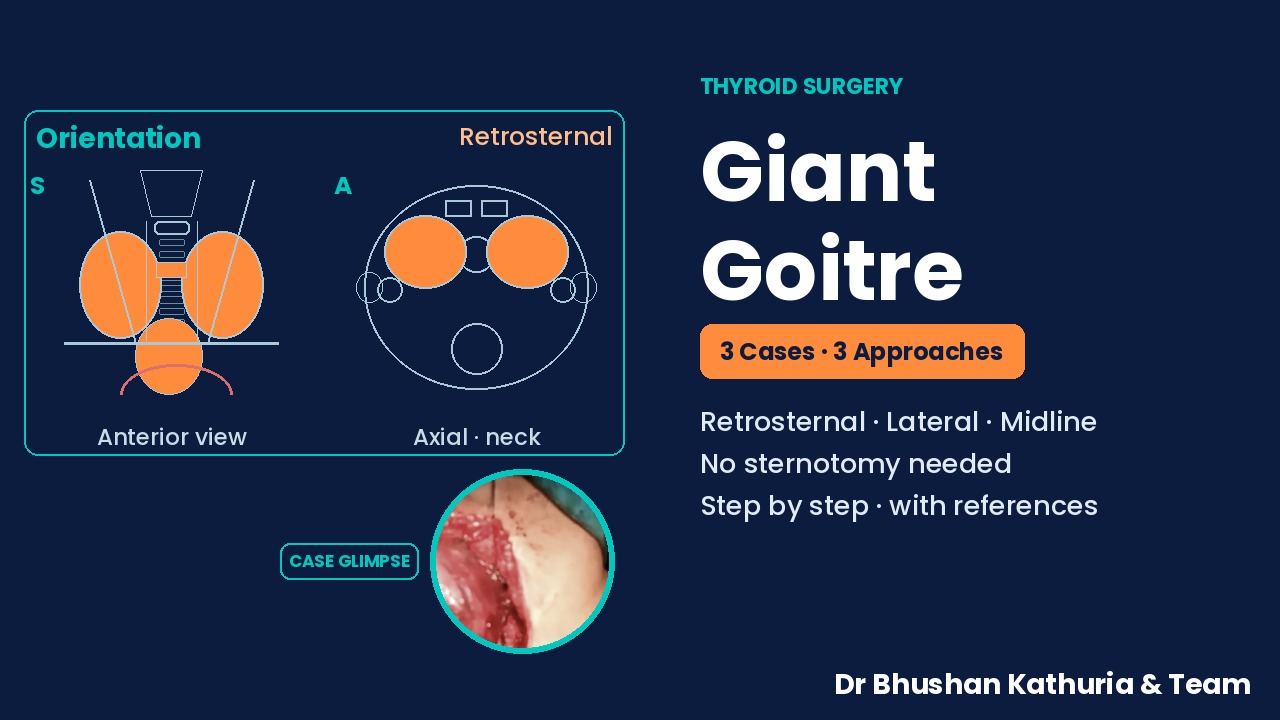
- Diagnosis
- Giant multinodular goitre (three patients)
- Procedure
- Total thyroidectomy through a collar incision
- Approaches
- Cervical delivery of retrosternal extension · lateral strap-sparing · midline strap-dividing
- Sternotomy
- Not required
- Video
- 3 min · 13 operative steps
Abstract
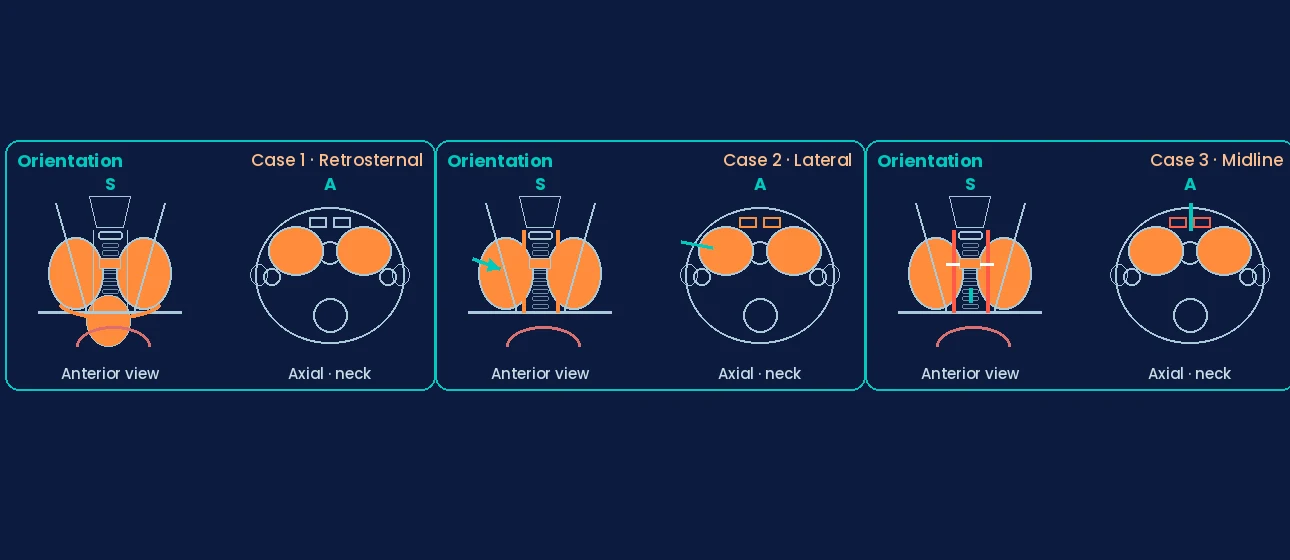
Three patients with giant multinodular goitre underwent total thyroidectomy through a collar incision. In the first, a retrosternal extension descending below the aortic arch was delivered into the neck by blunt finger dissection without sternotomy. In the second, the gland was removed through a lateral approach in the plane between the strap muscles and the sternocleidomastoid, preserving the strap muscles. In the third, the strap muscles were divided in the midline for access and re-approximated at closure. The operative steps of each approach are presented with geometric orientation, and the factors that guide the choice of access are discussed.
Keywords: giant goitre; retrosternal goitre; substernal goiter; total thyroidectomy; strap muscles; lateral approach thyroidectomy; cervical approach
Introduction
Giant and retrosternal goitres present particular technical challenges: distortion and compression of the trachea, displacement of the recurrent laryngeal nerves and parathyroid glands, and limited access to the inferior pole. Most cervicomediastinal goitres can be removed through a cervical incision, with a sternal split required in a small minority; mediastinal extension is associated with higher rates of hypoparathyroidism, recurrent laryngeal nerve palsy and haematoma [1]. Guidelines recommend cross-sectional imaging to define retrosternal extent and airway compromise before surgery [2].
Case presentation
Case 1: giant goitre with retrosternal extension descending below the aortic arch. Case 2: giant goitre with a dominant lobe lying beneath the strap muscles. Case 3: giant goitre with bilateral enlargement. Each patient underwent total thyroidectomy through a collar incision. Written informed consent for surgery and for de-identified educational use of images and video was obtained.
Surgical technique
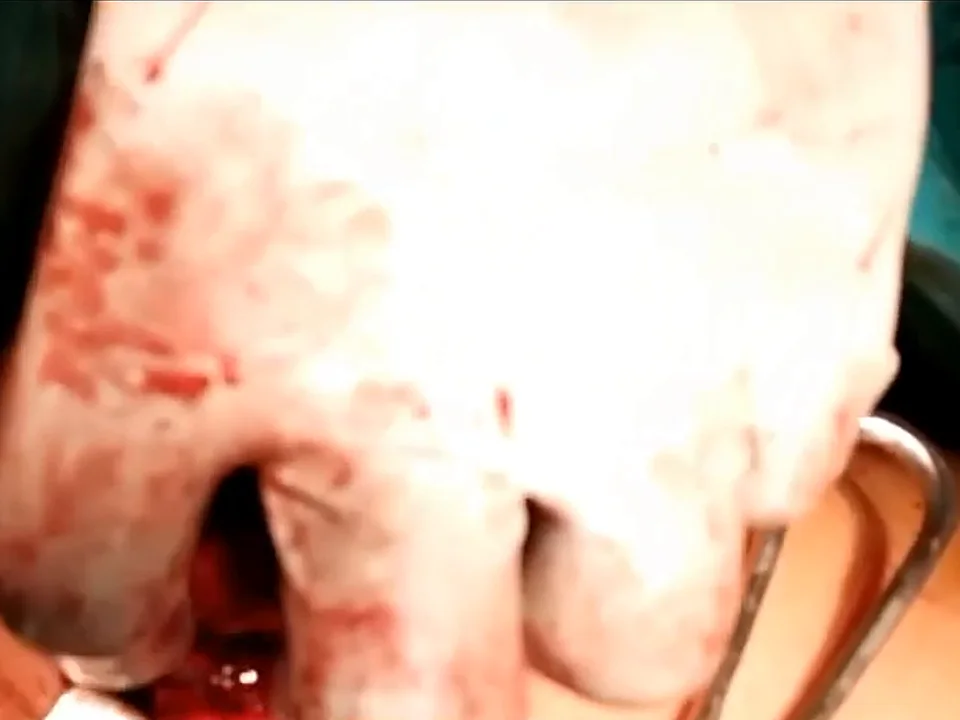
Case 1 · Exposure of the giant goitre
Through a collar incision the enlarged gland fills the wound.
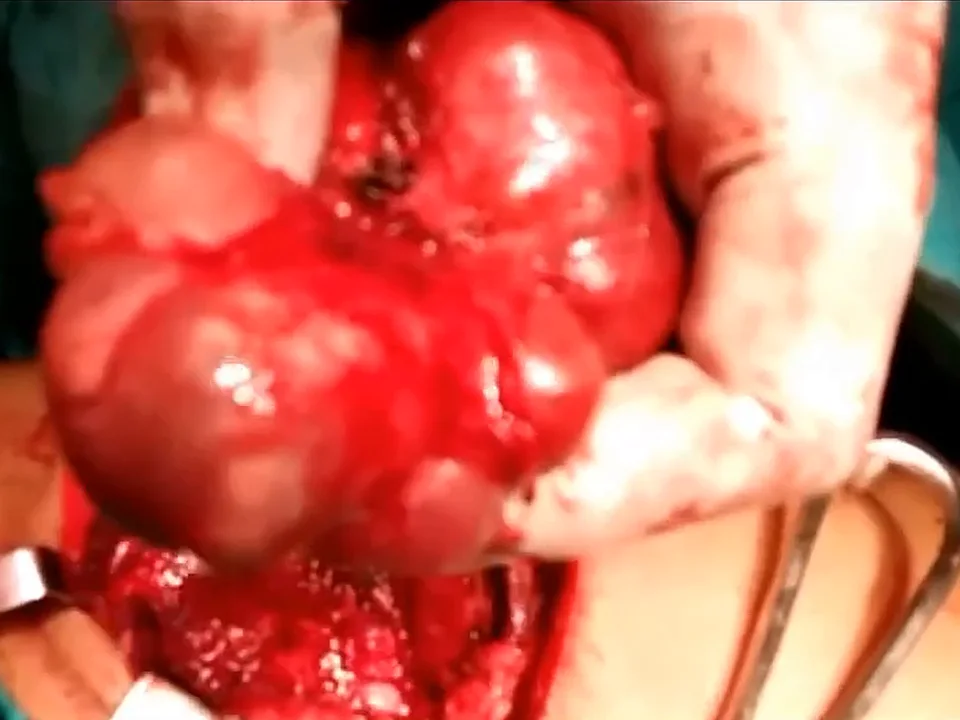
Case 1 · Exposure of the giant goitre Case 1 · Delivery of the retrosternal component
The extension below the aortic arch is delivered into the neck by blunt finger dissection along the capsule.
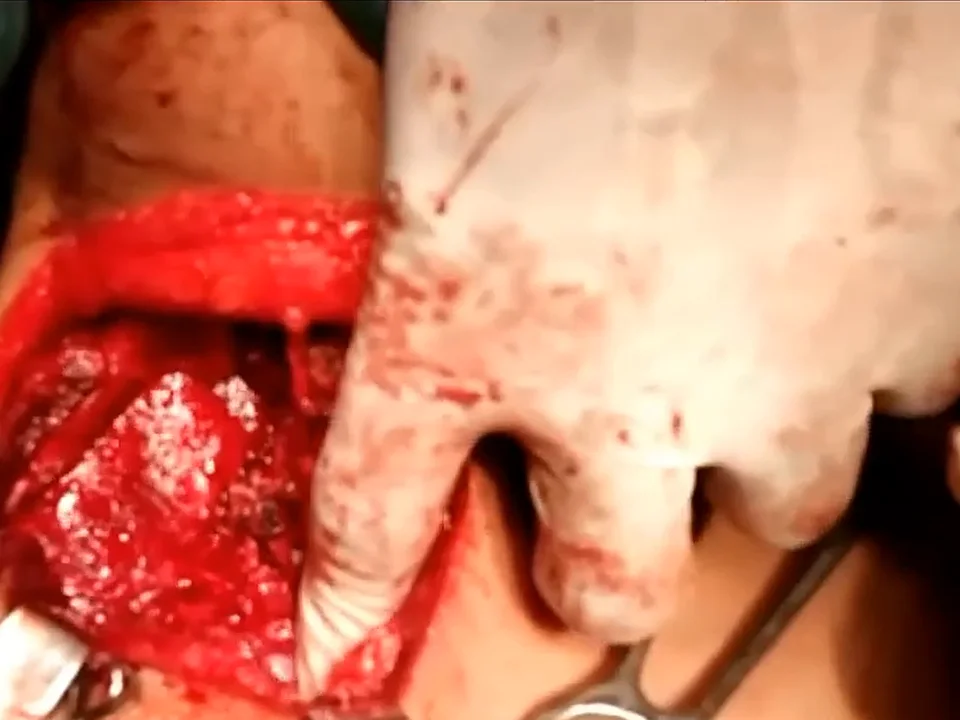
Case 1 · Delivery of the retrosternal component Case 1 · Thyroid bed
The bed after removal; no sternotomy was required.
Case 1 · Thyroid bed Case 2 · Lateral approach
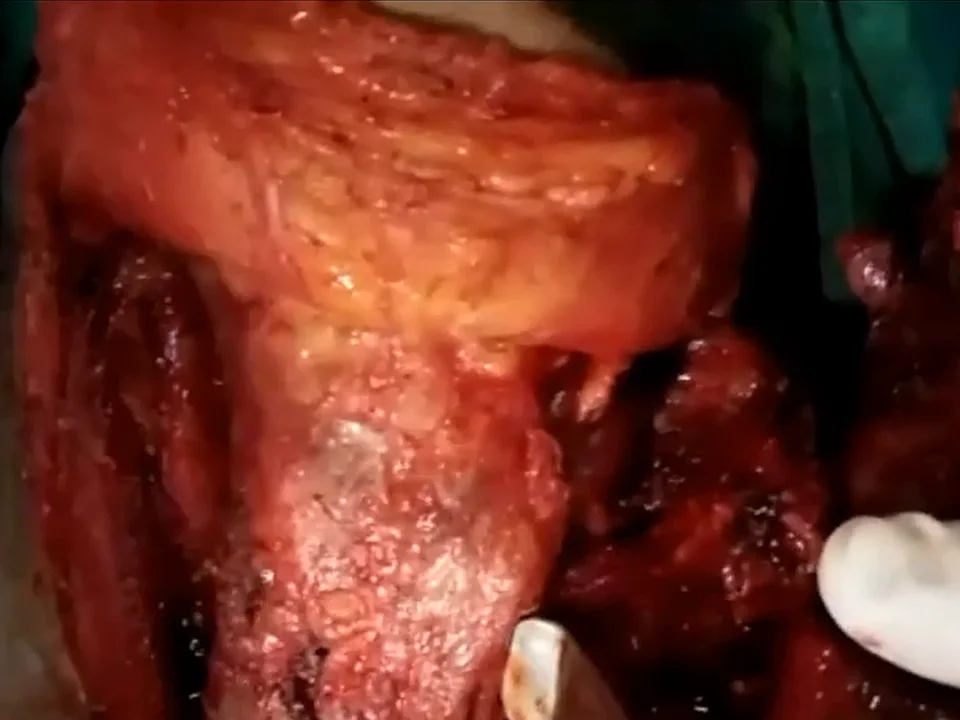
The plane between the strap muscles and the sternocleidomastoid is developed; the strap muscles are preserved and retracted medially.
Case 2 · Lateral approach Case 2 · Lobe delivered
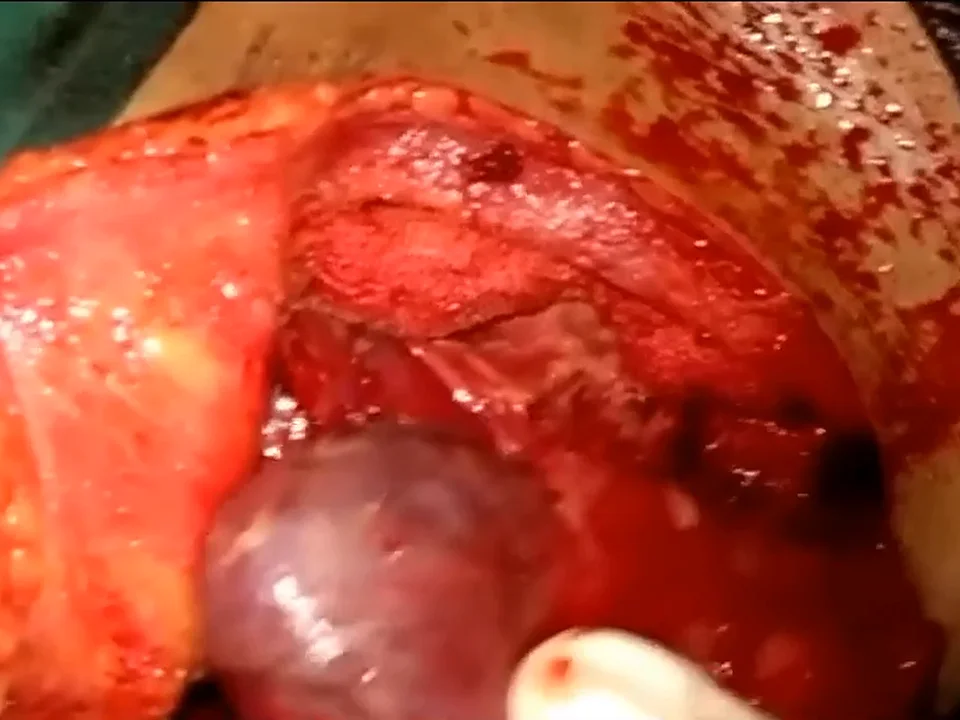
The giant lobe is mobilised and delivered from beneath the intact strap muscles.
Case 2 · Lobe delivered Case 2 · Specimen
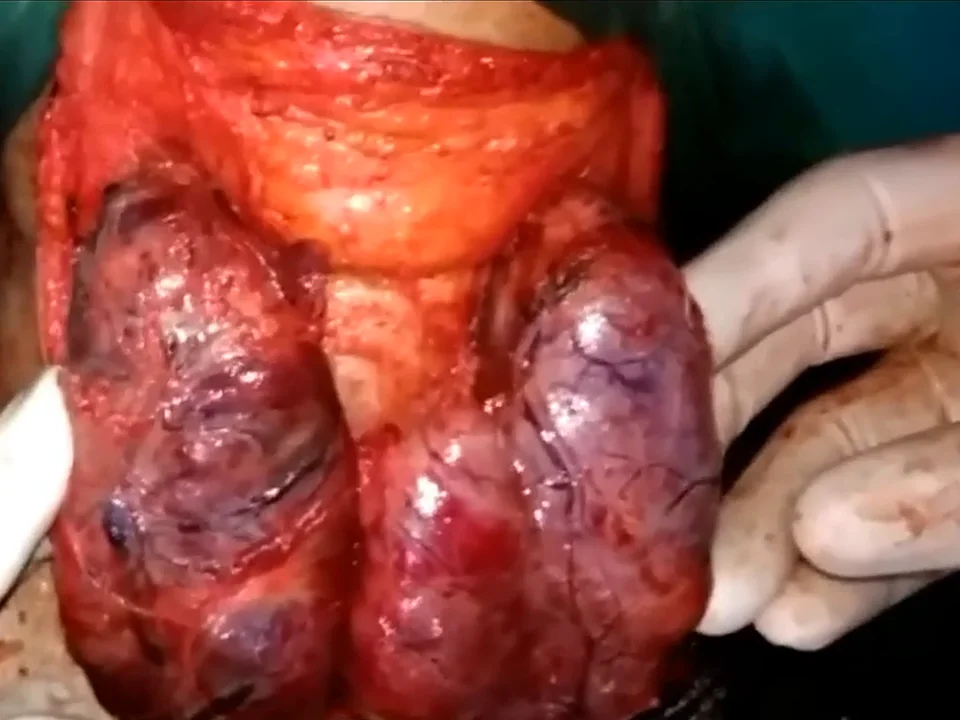
Both lobes of the giant goitre.
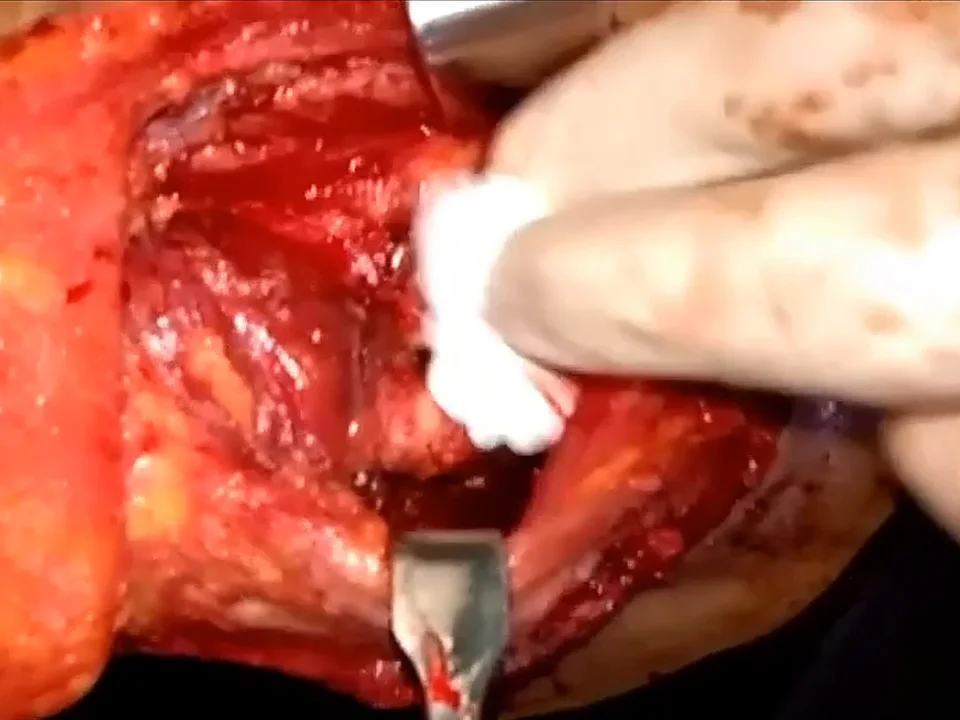
Case 2 · Specimen Case 2 · Thyroid bed
Strap muscles intact; haemostasis checked.
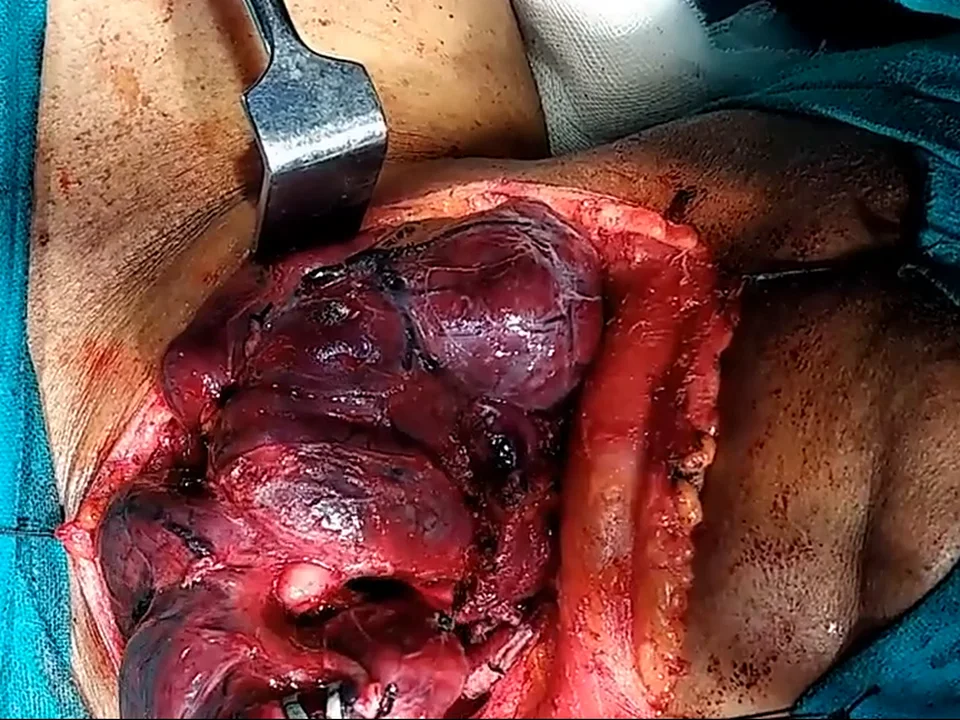
Case 2 · Thyroid bed Case 3 · Midline approach
The strap muscles are divided for access to the giant goitre.
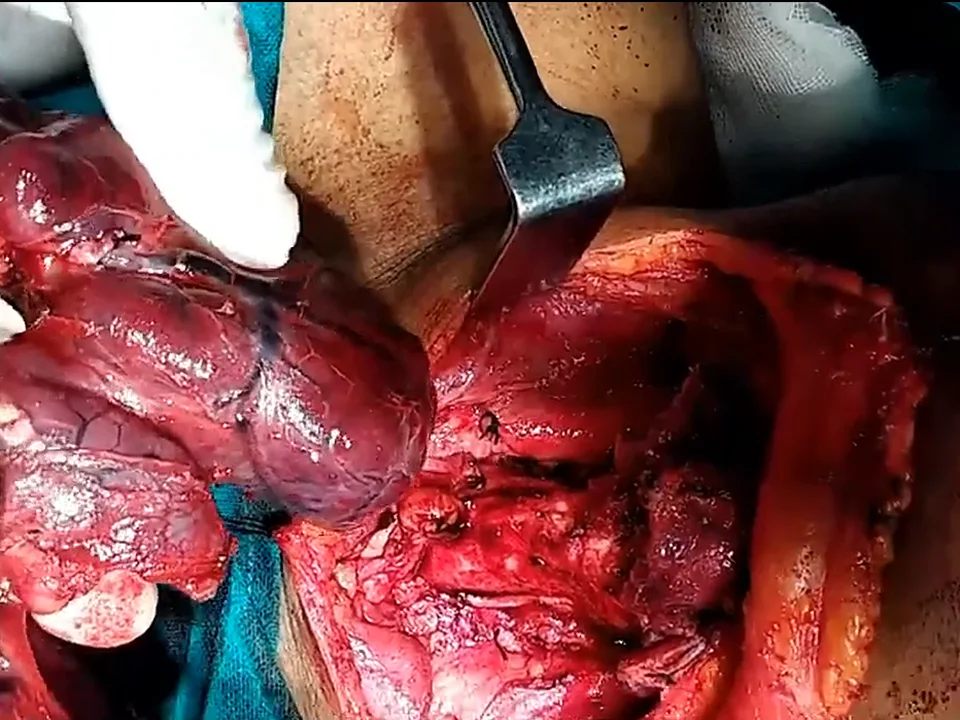
Case 3 · Midline approach Case 3 · Goitre delivered
The lobes are delivered out of the neck.
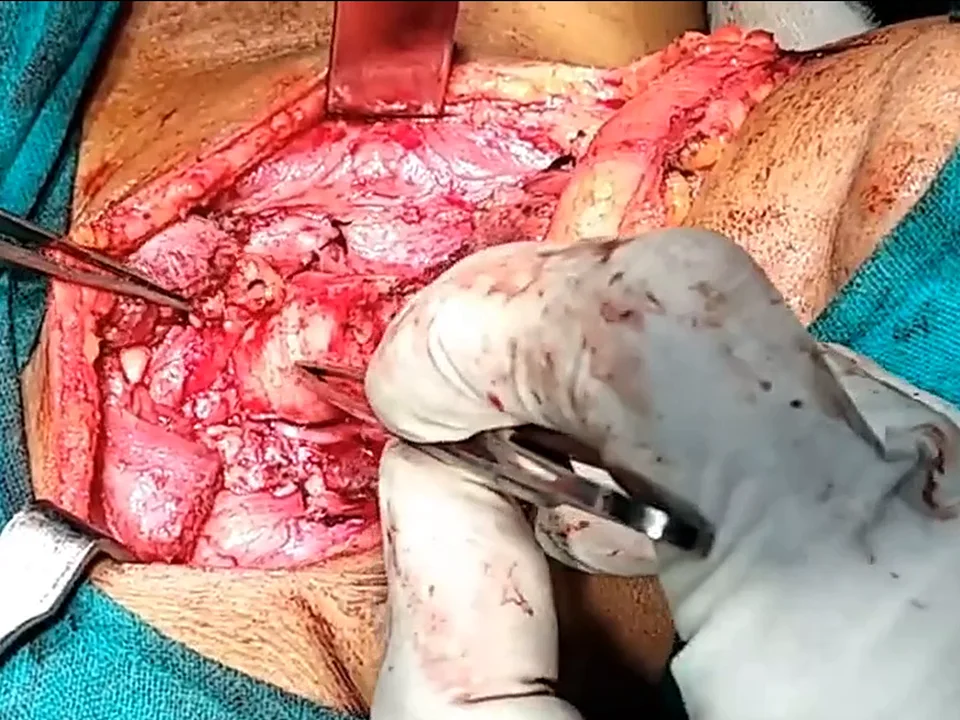
Case 3 · Goitre delivered Case 3 · Strap muscles re-approximated
The divided strap muscles are repaired in the midline before layered closure.
Case 3 · Strap muscles re-approximated
Postoperative management
- Airway observation and early assessment of voice.
- Serum calcium monitoring for hypoparathyroidism.
- Drain review and wound care.
- Thyroxine replacement after total thyroidectomy.
Discussion
The cervical route is sufficient for the great majority of retrosternal goitres, because the thoracic component usually derives its blood supply from the neck and can be delivered along the capsular plane once the cervical portion is mobilised; a sternal split is reserved for extension to the carina, ectopic mediastinal goitre, malignancy with invasion, or failure of cervical delivery [1,2]. The choice between preserving and dividing the strap muscles depends on gland size and configuration: a lateral approach between the strap muscles and the sternocleidomastoid gives direct access to a dominant lobe and preserves the straps, whereas division of the straps improves exposure of a very large bilateral gland. In every approach, identification of the recurrent laryngeal nerves and preservation of the parathyroid glands remain the priorities.
Learning points
- Define the retrosternal extent on CT; most goitres can be delivered through the neck.
- Choose strap-sparing lateral access or strap division according to size and shape.
- Identify and preserve the recurrent laryngeal nerves and parathyroid glands.
References
- Testini M, Gurrado A, Avenia N, et al. Does mediastinal extension of the goiter increase morbidity of total thyroidectomy? A multicenter study of 19,662 patients. Ann Surg Oncol. 2011;18(8):2251-2259. https://doi.org/10.1245/s10434-011-1596-4
- Patel KN, Yip L, Lubitz CC, et al. The American Association of Endocrine Surgeons guidelines for the definitive surgical management of thyroid disease in adults. Ann Surg. 2020;271(3):e21-e93.
Consent and ethics
Written informed consent was obtained for surgery and for de-identified use of clinical images and video for education. No identifying information is shown; eyes are blurred where visible. This report is for medical education and does not replace individual clinical advice.
Surgical team
Dr Bhushan Kathuria & Team, Santosh Advance ENT Healthcare, Hisar. Consultants: Dr Bhushan Kathuria, Dr Parmod Jangra, Dr Harshvardhan. Clinical fellows: Dr Ayush, Dr Iqrorjon. Team · Fellowship and previous fellows.
How to cite
Kathuria B, and Team. Giant Goitre: Three Cases and Three Approaches — Cervical Delivery of Retrosternal Extension, Lateral Strap-Sparing and Midline Strap-Dividing Thyroidectomy. Surgical Perspective · Surgical Case Reports. 2026. Available at: https://bhushankathuria.com/case-giant-goitre-three-approaches-retrosternal-lateral-midline.html
More case reports
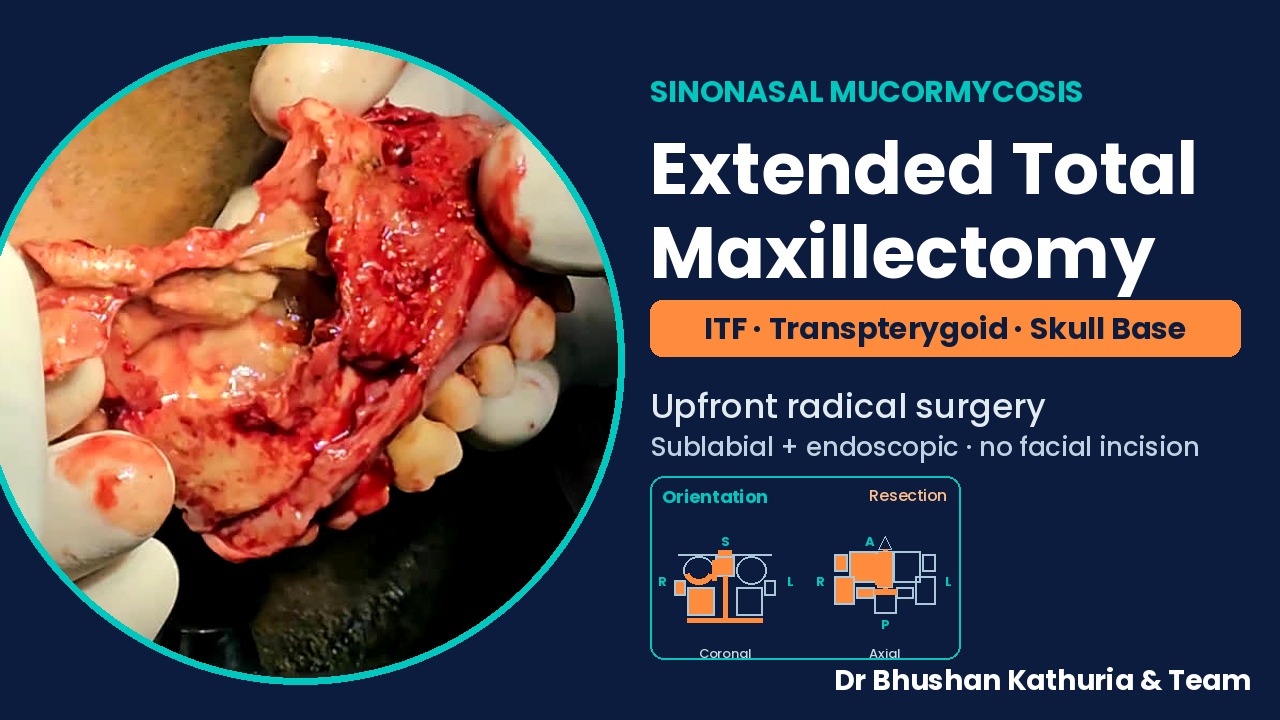
Extended Total Maxillectomy with Infratemporal Fossa, Transpterygoid and Anterior Skull Base Clearance for Sinonasal Mucormycosis
Upfront radical resection for fulminant sinonasal mucormycosis
▶ Video + case report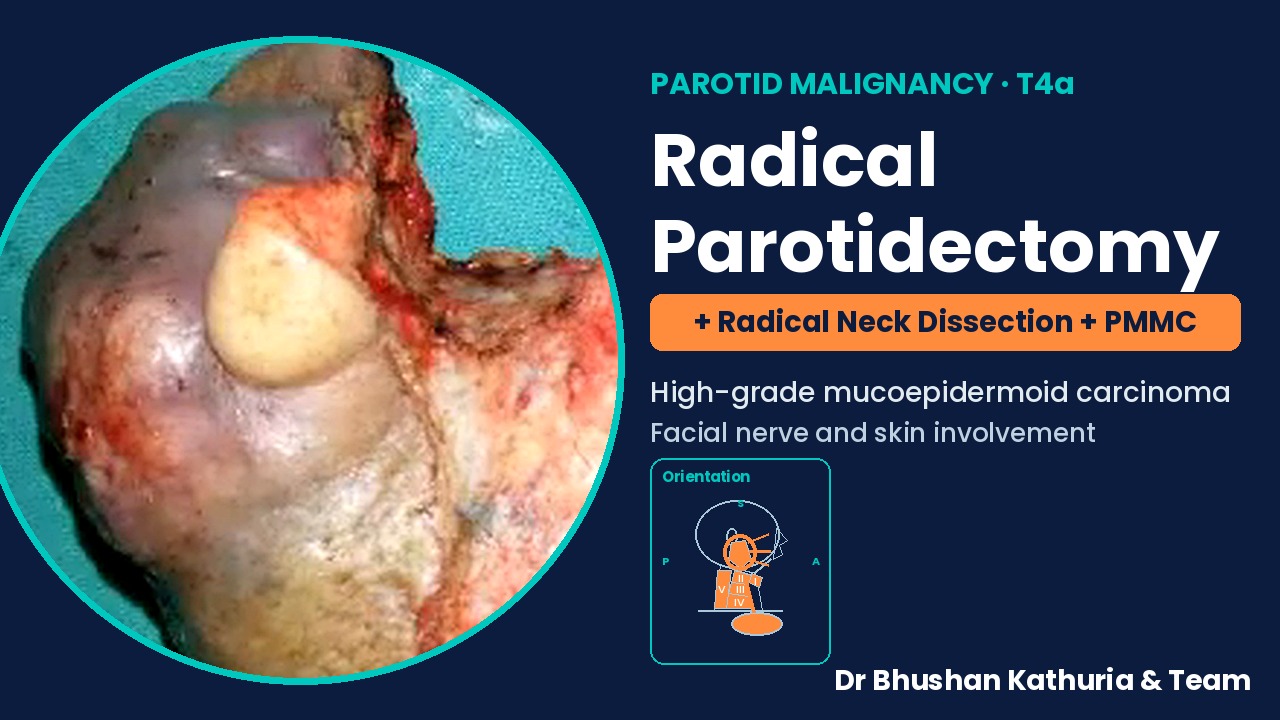
High-Grade Mucoepidermoid Carcinoma of the Parotid with Facial Nerve and Skin Involvement: Radical Parotidectomy, Radical Neck Dissection and PMMC Flap Reconstruction
Composite parotid resection with single-stage PMMC reconstruction
▶ Video + case report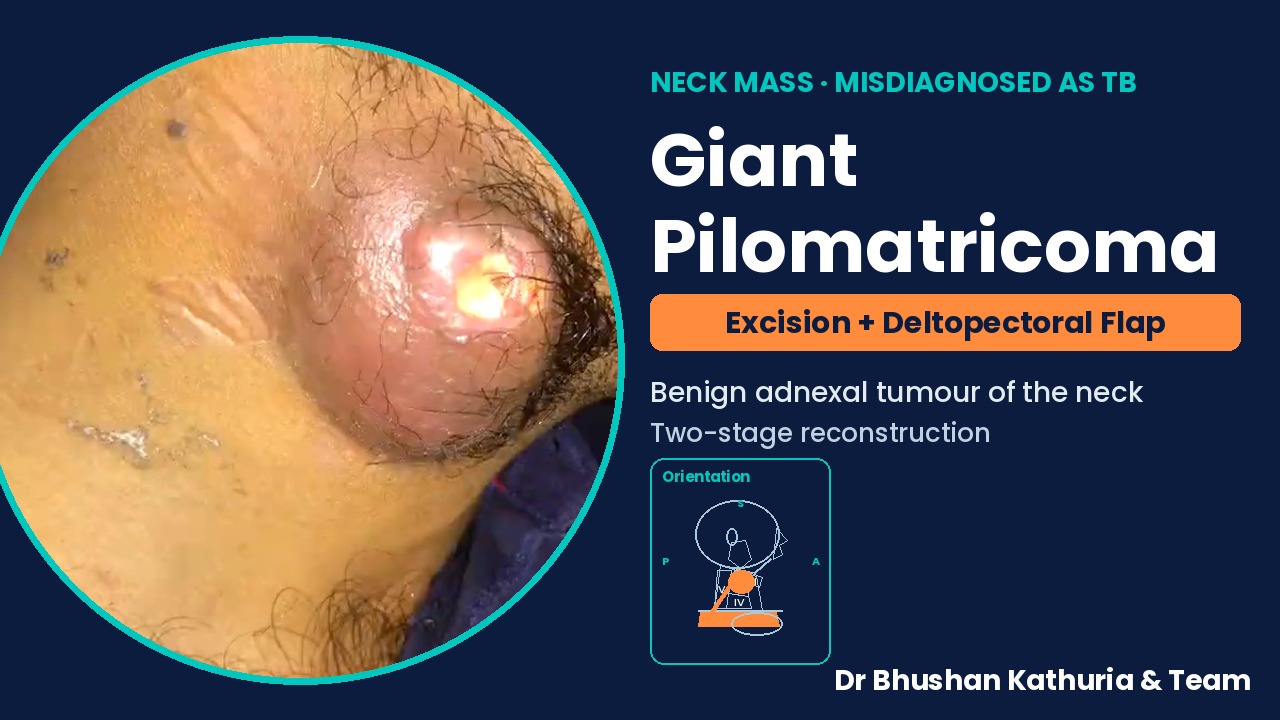
Giant Pilomatricoma of the Neck Misdiagnosed as Tubercular Lymphadenitis: Wide Local Excision and Two-Stage Deltopectoral Flap Reconstruction
Pilomatricoma presenting as a non-healing neck mass
▶ Video + case report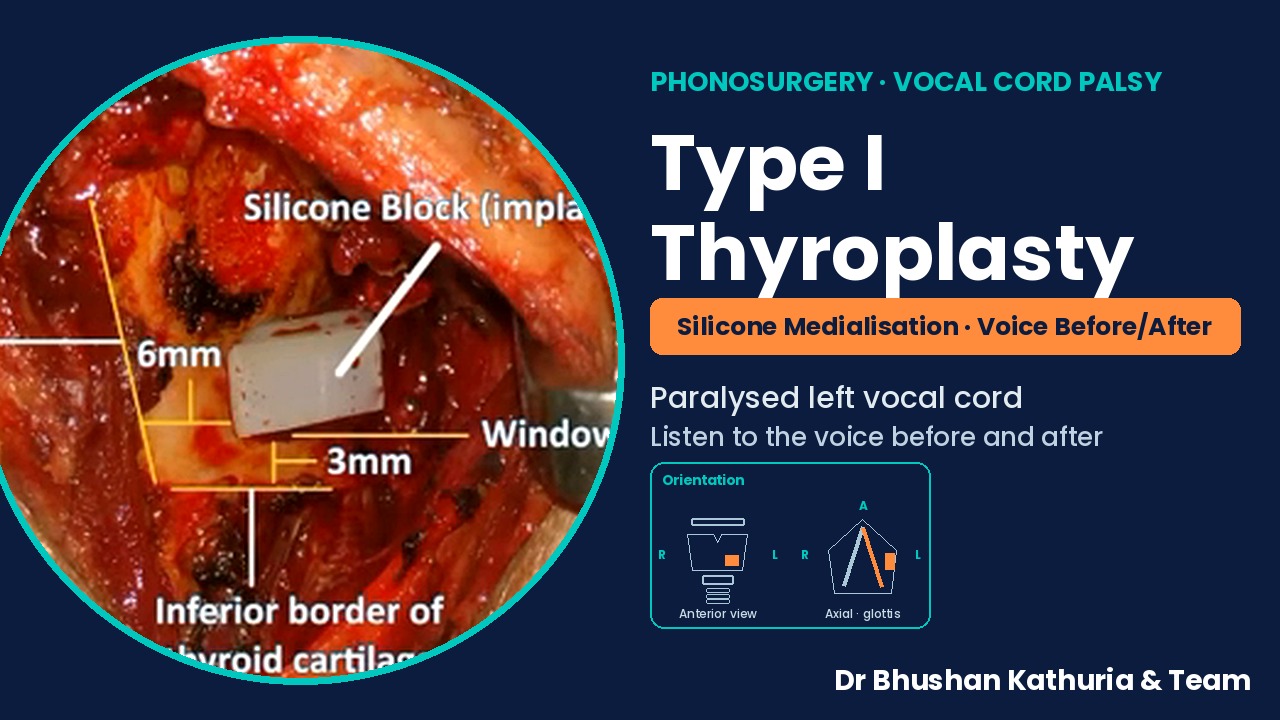
Type I Thyroplasty: Silicone Medialisation of a Paralysed Left Vocal Cord, with Pre- and Post-operative Voice
Medialisation thyroplasty for unilateral vocal fold palsy
▶ Video + case report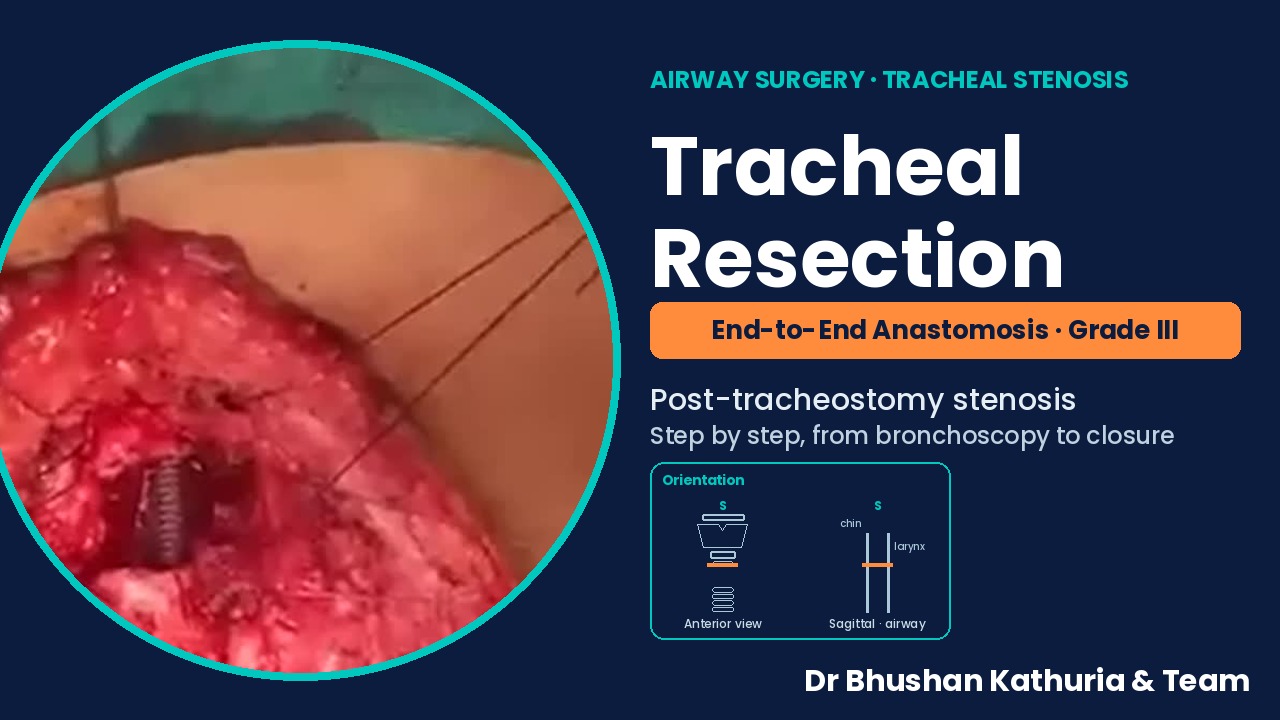
Segmental Tracheal Resection and End-to-End Anastomosis for Grade III Post-tracheostomy Tracheal Stenosis
Tracheal resection and primary anastomosis after failed decannulation
▶ Video + case report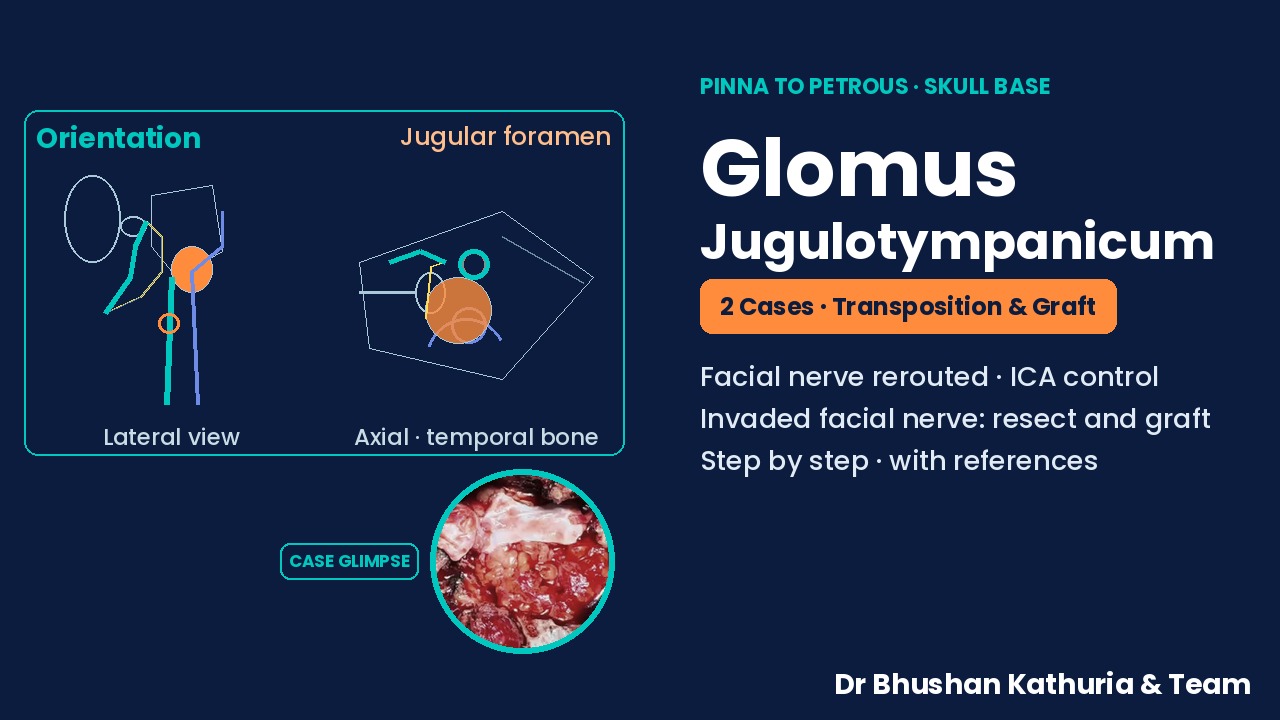
Glomus Jugulotympanicum, Two Cases from Pinna to Petrous: Facial Nerve Transposition with Carotid Control, and Facial Nerve Resection with Interposition Grafting
Two glomus jugulotympanicum cases: facial nerve transposition and facial nerve grafting
Case reportAll surgical case reports → · Head Neck Cancer · Voice Swallowing Breathing · Videos · YouTube channel · WhatsApp channel