
Sinusitis: when congestion becomes persistent sinus disease.
नाक बंद, साइनस, नाक से खून या एलर्जी — दूरबीन से सही जांच।Sinus, sir dard aur naak band — sahi ilaaj samjhein.
Sinusitis means inflammation of the nose and sinus spaces. Many short episodes settle with time and supportive care; symptoms lasting 12 weeks or longer are generally considered chronic rhinosinusitis and deserve a more structured assessment.
 In this guide
What can sinusitis feel like?
Typical symptoms include nasal blockage, thick nasal or post-nasal discharge, facial pressure or discomfort, and reduced smell. Headache, cough, dental discomfort, tiredness or bad breath may occur, but these symptoms are not specific to sinusitis and other causes may need consideration.
Acute versus chronic
Acute sinusitis is usually short-lived and often follows a viral upper-respiratory infection. Chronic rhinosinusitis is persistent inflammation lasting at least 12 weeks. Repeated short attacks and continuous chronic symptoms are not necessarily the same problem and may need different evaluation.
Diagnosis is more than a scan.
Clinical history
The pattern and duration of blockage, discharge, facial symptoms, smell loss, allergy, asthma, dental disease, previous surgery and prior treatment help define the problem.
Nasal examination & endoscopy
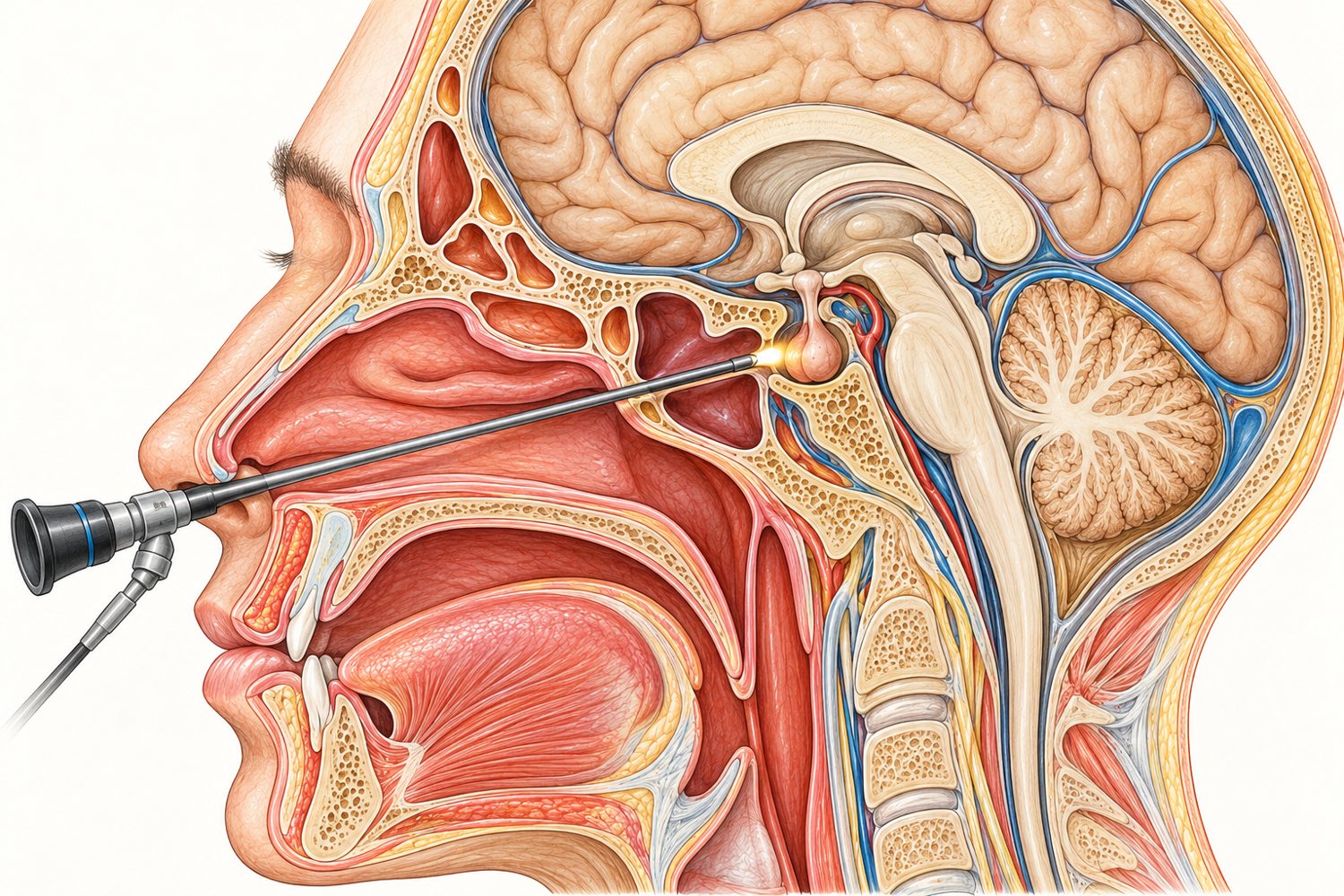
A nasal endoscope can provide a detailed view of the nasal cavity and sinus drainage areas and may identify inflammation, discharge, polyps or another structural cause.
CT imaging
CT is not routinely required for an uncomplicated short episode. It becomes more useful in persistent or recurrent disease, suspected complications, unusual presentations and when surgery is being considered.
Treatment depends on whether the problem is acute, chronic or recurrent.
- Supportive careMany uncomplicated acute episodes improve without surgery. Rest, hydration and appropriate symptom relief may be sufficient.
- Saline careSaline sprays or irrigation can help clear mucus and are commonly incorporated into chronic sinus care when appropriate.
- Control inflammationIntranasal corticosteroid sprays or drops may be used to reduce nasal and sinus inflammation, particularly in chronic disease.
- Treat contributing diseaseAllergy, nasal polyps, asthma, dental infection or other contributing factors may need treatment as part of the overall plan.
- Consider surgery selectivelyEndoscopic sinus surgery may be considered when appropriately treated chronic disease remains symptomatic or when anatomy and disease pattern justify an operative approach.
Not every sinus infection needs an antibiotic.
Many acute sinusitis episodes are viral and improve without antibiotics. Antibiotics may be appropriate when a clinician suspects bacterial infection or in selected complicated or persistent situations. Mucus colour by itself is not enough to decide that antibiotics are required.
Avoid self-directed repeated courses
Repeated antibiotics, oral steroids or decongestant use without reassessment can expose patients to side effects while delaying identification of allergy, polyps, structural disease, dental causes or another diagnosis.
What is the aim of surgery?
When surgery is appropriate, it is usually performed through the nostrils with an endoscope. The aim is to improve access to diseased sinus spaces and drainage pathways while preserving healthy function as far as possible. Surgery does not replace long-term medical management when the underlying condition is inflammatory.
Surgery is not the first step for everyone
The decision depends on symptoms, endoscopic findings, CT anatomy, prior medical treatment, presence of polyps, previous operations and the patient's goals. Revision and complex sinus disease require particularly careful planning.
Some symptoms need prompt in-person care.
Seek urgent medical assessment for swelling or redness around the eye, new double vision or visual loss, severe or rapidly worsening headache, forehead swelling, confusion, neck stiffness, significant neurological symptoms, or a rapidly deteriorating illness.
One-sided or unusual symptoms
Persistent symptoms mainly on one side, recurrent bleeding, an unexplained mass, marked facial swelling or other unusual features deserve specialist assessment rather than repeated empirical treatment.
Prepare for a sinus consultation.
Bring a timeline of symptoms and previous treatments. If CT scans, prior endoscopy findings or previous sinus surgery records are available, bring the actual imaging and operative documents where possible.
Useful information
Previous antibiotics or steroid courses, allergy/asthma history, prior nasal surgery, dental problems, smell changes and medicines currently being used can materially change the assessment.
Plan a Consultation Patient EducationMedical information notice
This guide provides general education and does not diagnose sinusitis or recommend treatment for an individual patient. Examination, nasal endoscopy, imaging and treatment decisions should be based on the clinical situation.
साइनस और नाक बंद — आम सवाल
साइनस का इलाज क्या है?
ज़्यादातर साइनस दवा, नाक के स्प्रे और नमक-पानी से नाक धोने से ठीक होता है। बार-बार हो या नाक में पॉलिप (मस्सा) हो तो दूरबीन से (एंडोस्कोपिक) साइनस सर्जरी की जाती है।
हिसार में साइनस और नाक बंद का इलाज कहाँ होता है?
संतोष एडवांस ईएनटी हेल्थकेयर, मंगलम लैब के पास, दयानंद कॉलोनी, जिंदल हॉस्पिटल रोड, मॉडल टाउन, हिसार (हरियाणा) 125001 में डॉ भूषण कथूरिया और ENT टीम साइनस और नाक बंद की जांच और इलाज करती है। OPD सोमवार से शनिवार, सुबह 10 से शाम 5 बजे; इमरजेंसी के लिए ENT सेवाएं 24 घंटे। फोन / WhatsApp: 85291 66866 / 70156 71278।
क्या आयुष्मान कार्ड या बीमा से इलाज हो सकता है?
हाँ, आयुष्मान भारत और सभी TPA बीमा में कैशलेस इलाज की सुविधा है — पात्रता, योजना के नियम और मंज़ूरी के अनुसार। ऑपरेशन या भर्ती से पहले केयर डेस्क से पुष्टि करें।
More patient guides
Aur jaankari, aasaan bhasha mein.
Have these symptoms?
Yeh lakshan hain? ENT jaanch karayein.
Book a consultation — bring any scans or reports you already have.