
Eardrum perforation
कान के पर्दे में छेद? ज़्यादातर ऑपरेशन से बंद हो सकता है।Kaan ke parde mein chhed — kab dawa kaafi hai, kab operation chahiye.
A hole or tear in the eardrum may follow infection, trauma or pressure injury. Many perforations heal, while persistent or recurrently infected perforations may need specialist treatment.
 In this guide
What is an eardrum perforation?
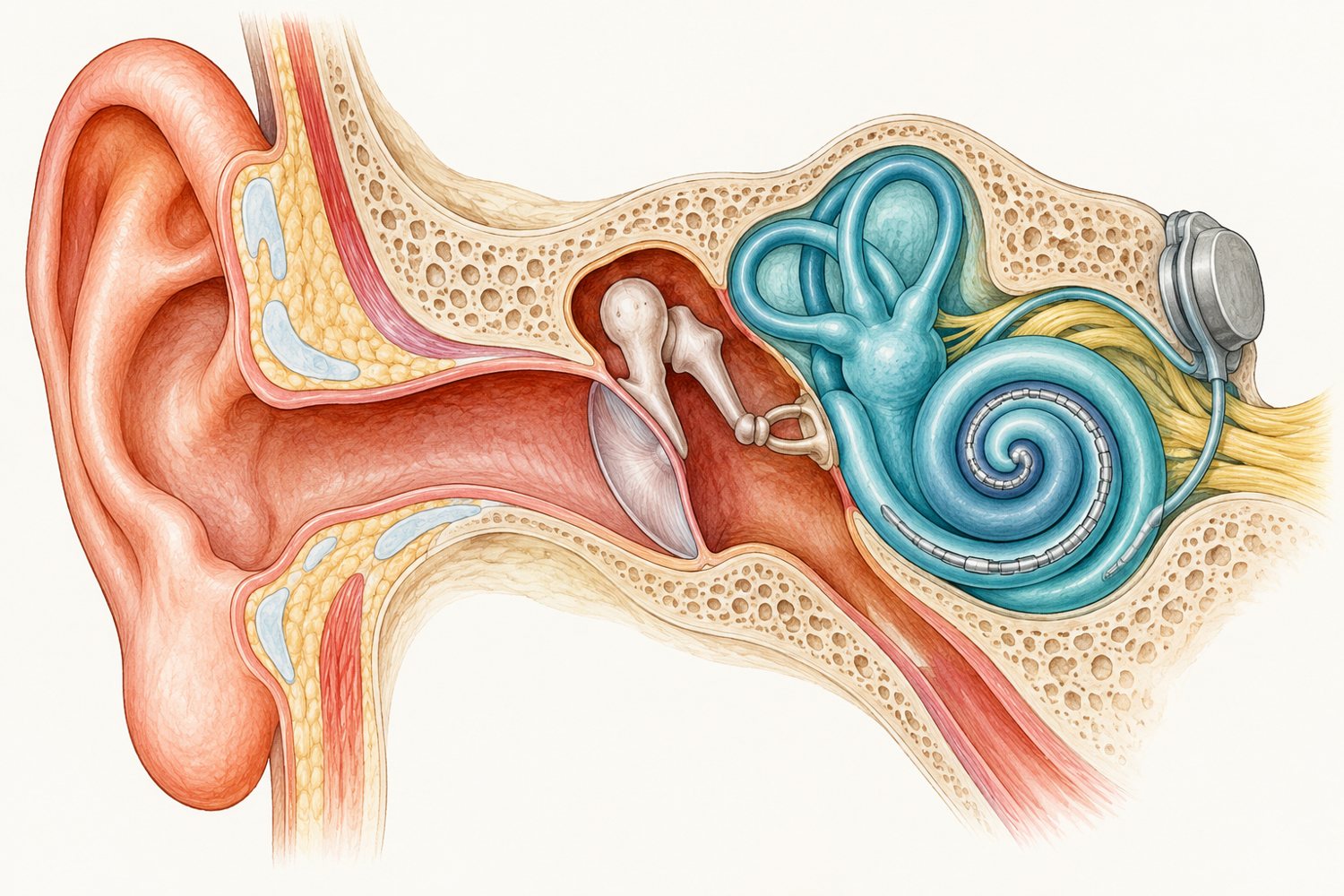
The eardrum, or tympanic membrane, separates the ear canal from the middle ear. A perforation is an opening in this membrane. It can occur after a middle-ear infection, injury to the ear, sudden pressure change, or insertion of an object into the ear.
The effect varies with the size and position of the perforation, the condition of the middle ear and whether infection is present.
What might you notice?
- Reduced hearingHearing may become muffled or less clear.
- Ear dischargeDischarge can occur when infection is present.
- PainPain may occur with infection or at the time of injury.
- Noise or imbalanceSome people notice tinnitus; dizziness after trauma needs prompt assessment.
How is it evaluated?
- HistorySymptoms, infections, trauma, water exposure and previous ear surgery are reviewed.
- Ear examinationThe ear canal and eardrum are examined, usually with otoscopy or microscopy.
- Hearing testAudiometry may be advised when hearing loss is persistent, significant or treatment is being planned.
- Middle-ear reviewPersistent discharge or suspected deeper disease may require additional assessment.
- PlanObservation, infection control, repair or further investigation is chosen according to the findings.
Does every perforation need surgery?
No. Many recent perforations can heal without an operation. Treatment depends on the cause, duration, hearing level, recurrent infection, size and site of the perforation, and the condition of the middle ear.
When a perforation persists and causes hearing problems, repeated discharge or limits normal ear care, repair may be considered. The operation is commonly described as myringoplasty or tympanoplasty; the exact procedure depends on the ear findings.
Protect the ear
Keep contaminated water out of the affected ear and avoid inserting cotton buds, oils, drops or other objects unless specifically advised. Medicines, including ear drops, should be selected after appropriate clinical assessment because not every product is suitable when the eardrum is perforated.
Some symptoms need earlier assessment.
Seek prompt medical review for severe or worsening pain, persistent or foul-smelling discharge, marked hearing loss, significant dizziness, facial weakness, fever with worsening ear symptoms, or a perforation following significant head or ear trauma.
After an injury
Sudden major hearing loss, severe vertigo, bleeding after significant trauma, neurological symptoms or facial weakness should not be managed only through online advice. Attend an appropriate emergency or ENT service.
कान के पर्दे का छेद — आम सवाल
कान के पर्दे का छेद कैसे बंद होता है?
छोटे और नए छेद कई बार अपने आप भर जाते हैं। पुराने छेद को टिम्पेनोप्लास्टी ऑपरेशन से बंद किया जाता है, जिससे कान बहना रुकता है और सुनने में सुधार हो सकता है।
हिसार में कान के पर्दे का छेद का इलाज कहाँ होता है?
संतोष एडवांस ईएनटी हेल्थकेयर, मंगलम लैब के पास, दयानंद कॉलोनी, जिंदल हॉस्पिटल रोड, मॉडल टाउन, हिसार (हरियाणा) 125001 में डॉ भूषण कथूरिया और ENT टीम कान के पर्दे का छेद की जांच और इलाज करती है। OPD सोमवार से शनिवार, सुबह 10 से शाम 5 बजे; इमरजेंसी के लिए ENT सेवाएं 24 घंटे। फोन / WhatsApp: 85291 66866 / 70156 71278।
क्या आयुष्मान कार्ड या बीमा से इलाज हो सकता है?
हाँ, आयुष्मान भारत और सभी TPA बीमा में कैशलेस इलाज की सुविधा है — पात्रता, योजना के नियम और मंज़ूरी के अनुसार। ऑपरेशन या भर्ती से पहले केयर डेस्क से पुष्टि करें।
More patient guides
Aur jaankari, aasaan bhasha mein.
Have these symptoms?
Yeh lakshan hain? ENT jaanch karayein.
Book a consultation — bring any scans or reports you already have.