
Nasal polyps: understanding blockage, loss of smell and treatment choices.
नाक में मस्सा (पॉलिप), नाक बंद या सूंघने की शक्ति कम — इलाज समझें।Naak mein maans (polyp), naak band ya soonghne ki shakti kam — ilaaj samjhein.
Nasal polyps are soft, usually painless and non-cancerous growths arising from inflamed lining inside the nose and sinuses. Treatment is aimed not only at removing blockage, but at controlling the underlying inflammation and maintaining long-term sinus health.
 In this guide
Symptoms often develop gradually.
Small polyps may cause few symptoms. Larger or multiple polyps can obstruct the nasal passages and sinus drainage pathways.
- Nasal blockagePersistent stuffiness or difficulty breathing through the nose.
- Reduced sense of smellSmell may become weak or absent; taste can also seem reduced.
- Runny nose or postnasal dripMucus may drain from the nose or down the throat.
- Pressure and recurrent sinus symptomsSome patients develop facial pressure, headache or repeated sinus problems.
A polyp is not simply “extra tissue.”
Nasal polyps commonly occur in the setting of chronic inflammation of the nose and sinuses. Asthma and sensitivity to aspirin or related medicines may coexist in some patients. Because other conditions can also cause nasal obstruction, persistent or unusual symptoms deserve proper examination.
Diagnosis starts with examination, not with a scan alone.
- HistoryDuration of blockage, smell loss, discharge, sinus symptoms, asthma, allergy and prior treatment.
- Nasal examinationThe nose is examined for visible obstruction and associated disease.
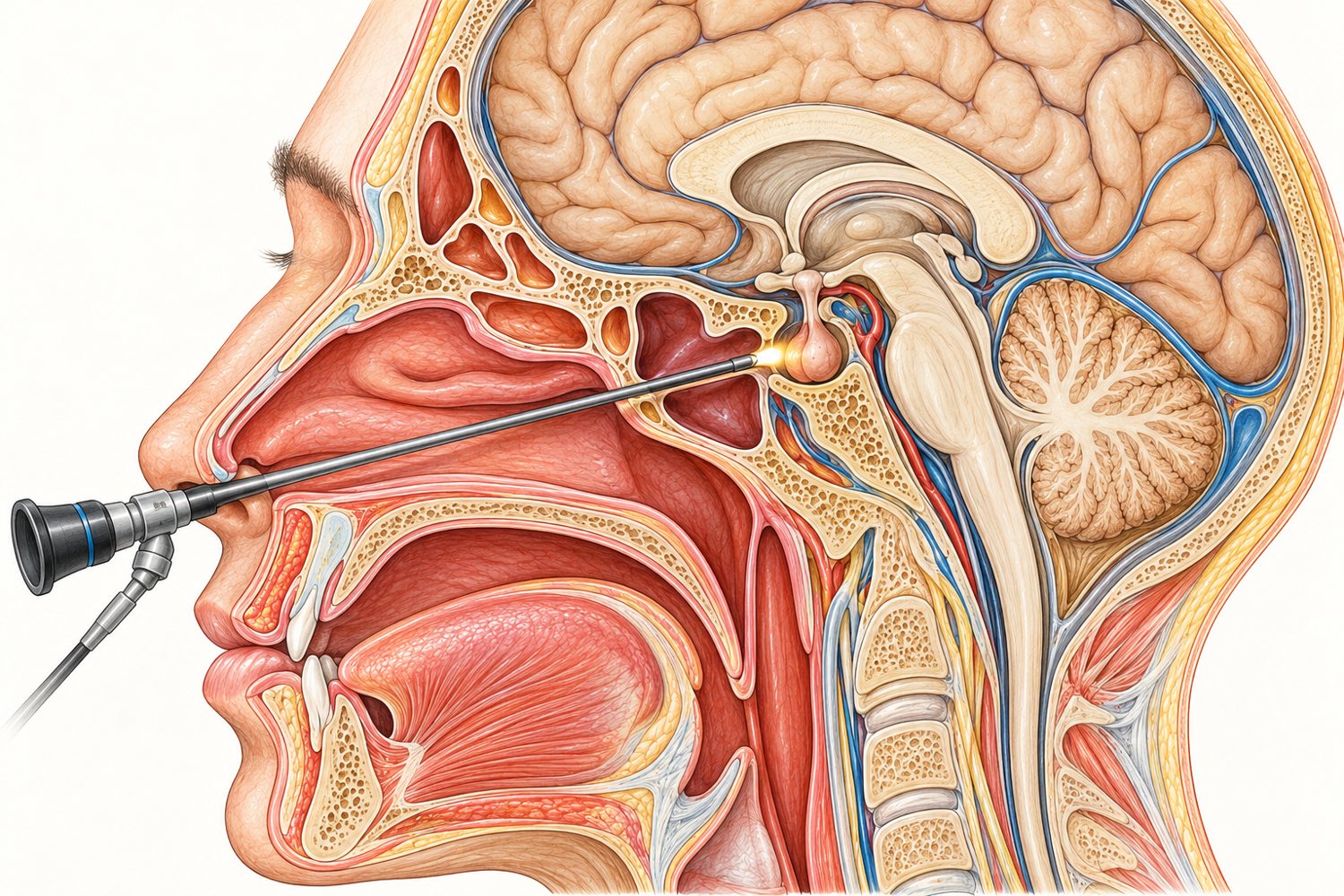
- EndoscopyA nasal endoscope can define the location and extent of polyps and assess drainage pathways.
- CT when indicatedCT of the sinuses may be useful in extensive disease, uncertain diagnosis or surgical planning.
- Individual planTreatment depends on symptoms, extent of disease, previous therapy and associated conditions.
For many patients, treatment begins with inflammation control.
Intranasal corticosteroid sprays or drops are commonly used to reduce inflammation and polyp size. Saline irrigation may help clear mucus and improve nasal care. Selected patients may need a short course of systemic corticosteroid under medical supervision.
Associated allergy, asthma or infection is treated when clinically relevant. In selected patients with severe or recurrent chronic rhinosinusitis with nasal polyps, specialist teams may consider biologic medicines after appropriate assessment.
Do not self-prescribe repeated steroid tablets.
Systemic corticosteroids can have important adverse effects and should be used only when clinically indicated and supervised. The choice, dose and duration of treatment depend on the individual patient.
Endoscopic sinus surgery is considered when symptoms and disease remain significant despite appropriate treatment.
Surgery is performed through the nostrils using an endoscope. The aim is to remove obstructing polyps and, when required, open affected sinus drainage pathways so ventilation, drainage and ongoing topical treatment can be improved.
Surgery is not a guarantee that polyps will never return. Long-term medical care and follow-up often remain important after an operation.
Maintenance matters.
Saline irrigation and prescribed intranasal corticosteroid therapy are commonly part of postoperative care. Follow-up allows healing to be assessed and recurrent inflammation to be detected early.
Not every blocked nose should be assumed to be polyps.
Arrange ENT assessment for persistent nasal blockage, progressive loss of smell, recurrent sinus symptoms, or symptoms that do not respond to routine treatment. One-sided symptoms, recurrent bleeding or an unusual nasal mass deserve particularly careful assessment.
Seek urgent medical care when symptoms escalate rapidly.
Urgent assessment is appropriate for significant swelling around the eye, new double vision or other visual change, severe or rapidly worsening headache, marked forehead swelling, neurological symptoms, or any rapidly deteriorating condition.
नाक के पॉलिप (मस्से) — आम सवाल
नाक में मस्सा (पॉलिप) हो तो क्या ऑपरेशन ज़रूरी है?
नाक के पॉलिप कैंसर नहीं होते। पहले स्प्रे और दवा से इलाज होता है; आराम न मिले तो दूरबीन से (एंडोस्कोपिक) सर्जरी की जाती है। बाद में भी स्प्रे और फॉलो-अप ज़रूरी रहता है।
हिसार में नाक के पॉलिप (मस्से) का इलाज कहाँ होता है?
संतोष एडवांस ईएनटी हेल्थकेयर, मंगलम लैब के पास, दयानंद कॉलोनी, जिंदल हॉस्पिटल रोड, मॉडल टाउन, हिसार (हरियाणा) 125001 में डॉ भूषण कथूरिया और ENT टीम नाक के पॉलिप (मस्से) की जांच और इलाज करती है। OPD सोमवार से शनिवार, सुबह 10 से शाम 5 बजे; इमरजेंसी के लिए ENT सेवाएं 24 घंटे। फोन / WhatsApp: 85291 66866 / 70156 71278।
क्या आयुष्मान कार्ड या बीमा से इलाज हो सकता है?
हाँ, आयुष्मान भारत और सभी TPA बीमा में कैशलेस इलाज की सुविधा है — पात्रता, योजना के नियम और मंज़ूरी के अनुसार। ऑपरेशन या भर्ती से पहले केयर डेस्क से पुष्टि करें।
More patient guides
Aur jaankari, aasaan bhasha mein.
Have these symptoms?
Yeh lakshan hain? ENT jaanch karayein.
Book a consultation — bring any scans or reports you already have.