
Speaking again after total laryngectomy.
गले के ऑपरेशन के बाद भी आवाज़ वापस आ सकती है।Gale ke operation ke baad bhi awaaz wapas aa sakti hai.
Total laryngectomy changes how a person breathes and produces voice, but loss of the natural voice does not mean loss of communication. Rehabilitation is planned around the operation, healing, individual anatomy, treatment history and patient preference.
 In this guide
Breathing and voice are separated after total laryngectomy.
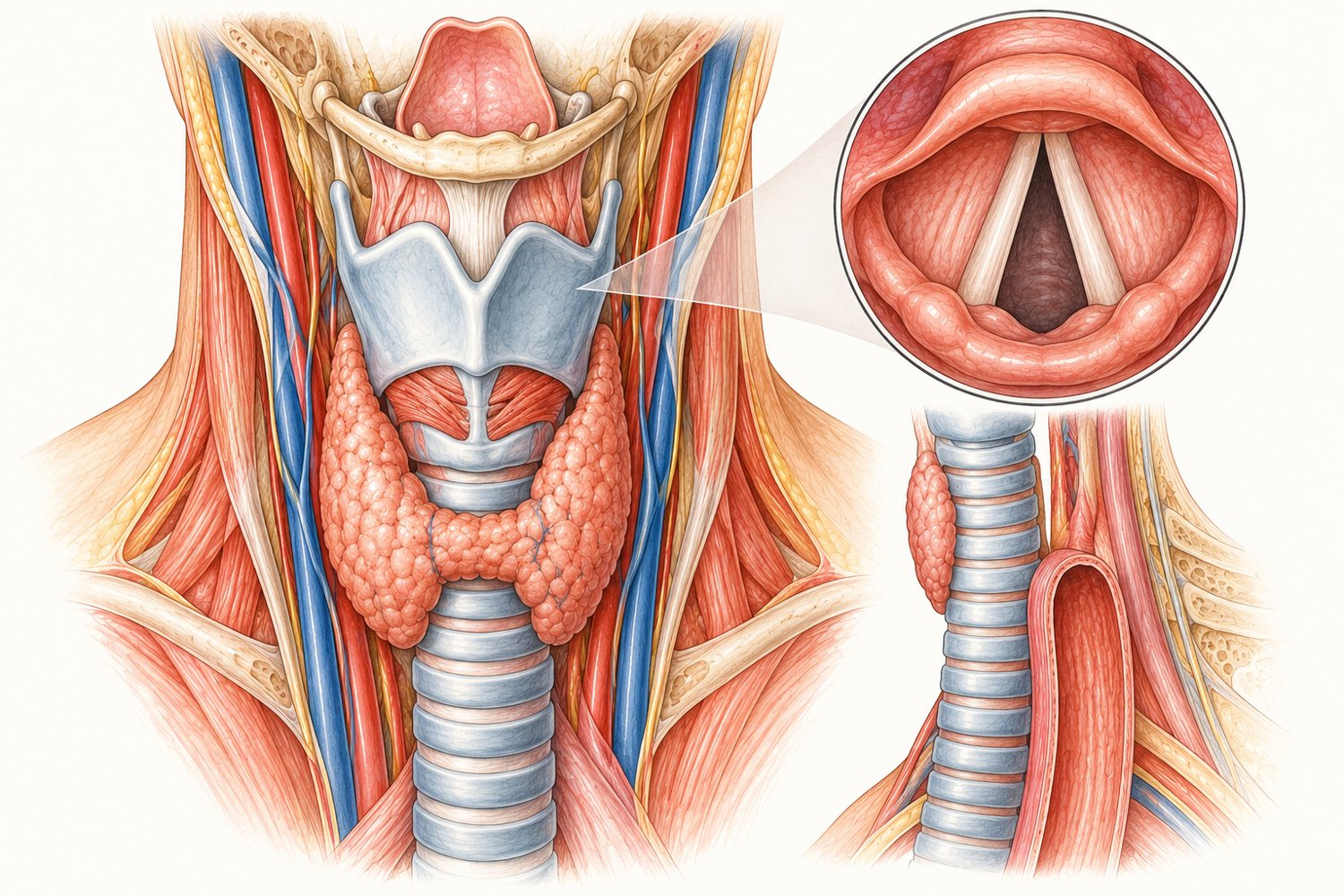
After the whole larynx is removed, breathing occurs through a permanent neck stoma. The vocal cords are no longer present to generate the previous voice. Communication therefore uses a new sound source or an electronic aid, while the lips, tongue and mouth continue to shape speech.
Early communication may use writing, gestures, a phone or tablet while healing takes place. Speech and language therapy is an important part of recovery.
Rehabilitation is individual
There is no single best voice method for every person. Previous radiotherapy, reconstruction, hand function, lung function, stoma anatomy, healing and personal preference can influence which approach works best.
Three established pathways can provide alaryngeal speech.
Voice prosthesis / TEP
A small one-way voice prosthesis may be placed through a tracheoesophageal puncture between the airway and oesophagus. Exhaled lung air is redirected to create vibration and sound, which is shaped into speech.
The puncture may be created during laryngectomy or later in selected patients. Training and ongoing prosthesis care are required.
Electronic voice
An electrolarynx is a battery-operated device that generates vibration. It is usually held against the neck or cheek, and articulation with the mouth converts the vibration into understandable speech.
It can provide useful communication during rehabilitation or become the preferred long-term method for some patients.
Equipment-free speech
Air is introduced into the oesophagus and released to produce vibration in the upper oesophageal region. The resulting sound is shaped into words.
This method needs training and practice and is easier for some people than others, but it does not require a prosthesis or electronic device.
A prosthesis needs follow-up, not just placement.
Patients using tracheoesophageal speech learn how to produce voice, clean the prosthesis and recognise problems. Prostheses require periodic assessment and replacement. Leakage through or around the prosthesis, difficulty producing voice, pain, bleeding or a displaced prosthesis should be reviewed by the treating team.
Some patients speak by temporarily covering the stoma or heat-and-moisture exchanger; selected patients may later use a hands-free system.
Do not improvise with a displaced prosthesis
If a voice prosthesis becomes displaced or significant leakage occurs, contact the laryngectomy/ENT team promptly. Management depends on the individual tract and device.
Rehabilitation also includes airway, swallowing and daily life.
After total laryngectomy, inhaled air bypasses the nose and mouth. Stoma care and heat-and-moisture exchange can help condition inhaled air and manage mucus. Patients also learn safe showering and airway protection.
Swallowing is assessed during recovery, particularly when reconstruction or previous radiotherapy is involved. Dietetic support and swallowing therapy may be needed for selected patients.
Emergency identification matters
A total-laryngectomy patient breathes through the neck stoma, not through the nose or mouth. Patients and families should understand this altered airway and follow the emergency instructions provided by their clinical team.
Recovery is a process rather than a single procedure.
- Pre-operative counsellingUnderstand expected voice, airway and swallowing changes where possible before surgery.
- Early communicationUse writing or electronic communication while healing and airway care are established.
- Voice selectionAssess suitability for TEP/prosthesis, electrolarynx, oesophageal speech or a combination.
- TrainingSpeech therapy develops intelligibility, fluency, device use and confidence.
- Long-term careContinue stoma, prosthesis, swallowing and cancer-surveillance follow-up as advised.
When should you seek review?
Contact your treating team for new difficulty producing voice, recurrent prosthesis leakage, swallowing deterioration, unexplained weight loss, increasing pain, bleeding, new neck swelling, persistent chest symptoms or problems with the stoma.
Significant breathing difficulty or acute airway obstruction requires urgent emergency assessment.
Bring to review
Bring details of the laryngectomy and reconstruction, radiotherapy records where relevant, current prosthesis/device information, medicines and a short description of the communication or swallowing problem.
Plan a ConsultationImportant
This guide provides general education and cannot determine which rehabilitation method is appropriate for an individual patient. Voice prosthesis placement, device changes, swallowing problems and airway concerns require assessment by the relevant ENT/head-and-neck and speech rehabilitation team.
Back to Patient Educationगले के ऑपरेशन के बाद आवाज़ — आम सवाल
लैरिंजेक्टॉमी के बाद क्या दोबारा बोल सकते हैं?
हाँ, वॉइस प्रोस्थेसिस, इसोफेजियल स्पीच या इलेक्ट्रोलैरिंक्स से कई मरीज़ फिर से बोल पाते हैं। स्पीच थेरेपी और नियमित फॉलो-अप ज़रूरी है।
हिसार में गले के ऑपरेशन के बाद आवाज़ का इलाज कहाँ होता है?
संतोष एडवांस ईएनटी हेल्थकेयर, मंगलम लैब के पास, दयानंद कॉलोनी, जिंदल हॉस्पिटल रोड, मॉडल टाउन, हिसार (हरियाणा) 125001 में डॉ भूषण कथूरिया और ENT टीम गले के ऑपरेशन के बाद आवाज़ की जांच और इलाज करती है। OPD सोमवार से शनिवार, सुबह 10 से शाम 5 बजे; इमरजेंसी के लिए ENT सेवाएं 24 घंटे। फोन / WhatsApp: 85291 66866 / 70156 71278।
क्या आयुष्मान कार्ड या बीमा से इलाज हो सकता है?
हाँ, आयुष्मान भारत और सभी TPA बीमा में कैशलेस इलाज की सुविधा है — पात्रता, योजना के नियम और मंज़ूरी के अनुसार। ऑपरेशन या भर्ती से पहले केयर डेस्क से पुष्टि करें।
More patient guides
Aur jaankari, aasaan bhasha mein.
Have these symptoms?
Yeh lakshan hain? ENT jaanch karayein.
Book a consultation — bring any scans or reports you already have.